Dent Puller Glue: Choose & Use for Clean Pulls
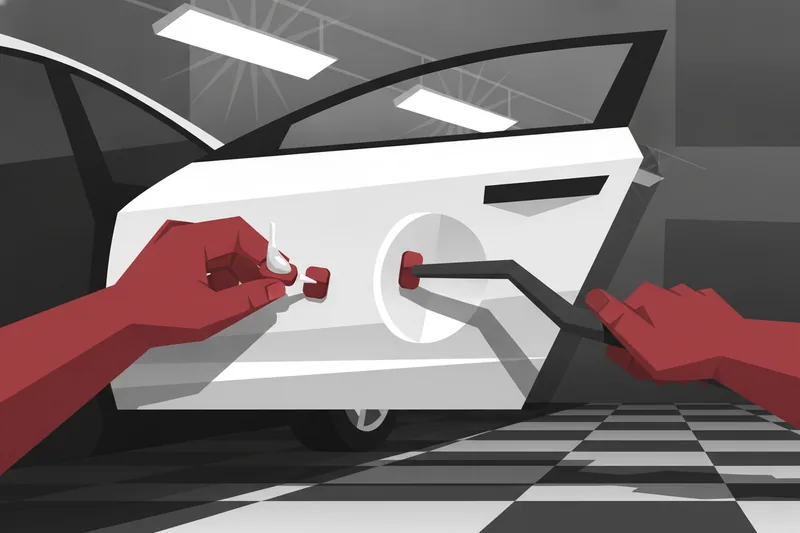
Dent puller glue is the adhesive that lets a technician pull a dent from the painted side of a panel instead of pushing it out from behind — and choosing the right one means matching the glue's chemistry and temperature rating to the job, then pairing it with a tab and pulling tool built for the same conditions. Get that match wrong and you lose pull control, waste tabs, or risk the finish; get it right and the repair moves as fast as backside access ever did.
What Dent Puller Glue Is and How Glue Pull Repair Works
Dent puller glue is the adhesive used in glue pull repair (GPR), a conventional panel-straightening technique derived from PDR where a tab is bonded to the exterior of a panel and pull is transferred through that tab rather than through a rod or bar worked from behind. It exists because paintless dent repair (PDR), which traditionally reads reflection against a line board while pushing metal from the backside, hits limits wherever backside access is restricted or absent — double-skinned panels, bonded liners, braces in the way. Glue pull repair extends the same shaping discipline to those cases, using a pulling tab and a pulling tool instead of a push tool.
A kit built for occasional, light use and one built for daily professional throughput can look similar on a shelf and still solve different problems — the tab geometry, the glue's repeat-pull life, and how clearly the parts are matched to each other are what separate them. That's the gap Glexo's adhesive systems are built to close: matching glue, tab, and pulling tool as a set rather than selling a single generic stick of glue and hoping it fits the job.
Hot Glue vs. Cold Glue: Tradeoffs for Professional Work
Hot glue pulling bonds a tab to the panel with a hot-melt adhesive stick, melted and applied through a glue gun. Cold glue is a reusable tacky or viscoelastic compound that goes straight onto the tab with no heating step at all. Neither is better than the other in general terms — they're different tools for different combinations of damage, finish, and pull dynamics, and the right call depends on what's in front of you.
Cure time and bond strength run in opposite directions for the two. Hot glue sets fast once it cools and produces a rigid, high-strength bond capable of generating serious pulling force, which is why it handles small, deep, sharp dents well. Cold glue trades some of that pinpoint strength for flexibility: it's a better match for large shallow dents, heavy hail damage, and crown work — whether a design crown or a damage crown — where you're moving broad areas of metal rather than chasing one sharp low spot. Hot glue sticks also come in temperature-specific formulations, so their performance shifts with ambient conditions much the same way cold glue's does — "hot glue" doesn't mean fixed performance regardless of shop temperature.
Repeat-pull durability is where the two diverge most for high-volume work. A cold glue compound peels off the tab and goes back on for the next pull, cycle after cycle, as long as it's kept clean and in good condition. A hot glue tab is generally a one-pull bond that needs to be released and the tab cleaned before reuse. That's why a lot of hail work starts with cold glue for broad initial movement, then switches to hot glue for the fine detail work cold glue isn't built for — though that order isn't a fixed rule; plenty of repairs run entirely on one or the other depending on the damage.
Matching Glue to Ambient Temperature and Panel Surface
Selecting glue by temperature range
Cold glue is typically sold in ambient-temperature bands — formulated for use up to roughly 86°F/30°C, or in a separate variant for working above it. That rating describes the air temperature in the shop or bay, not the heat of the panel itself, so a cold glue rated for cooler weather can still underperform on a panel baking in direct sun even if the shop thermometer reads mild. The same caution applies to a glue gun's dial setting: it isn't the same as the panel temperature or the actual bond temperature at the glue-to-paint interface, so a gun reading "hot enough" doesn't confirm the bond will behave as expected on a cold panel. Warming an adhesive system into working condition is normal practice — it's conditioning the product, not license to heat the panel to compensate.
When backside access isn't available — a double-panel section, a bonded liner — the realistic options are exterior hot glue or cold glue, and which one is safe depends on the finish and the specific product rather than a blanket rule. A tab's color or surface texture isn't a standardized strength code across brands either, so match tabs by the manufacturer's stated compatibility, not by assuming a darker or rougher tab automatically pulls harder.
Prepping the surface before application
Surface preparation in this trade means chemical cleaning — a high-concentration isopropyl alcohol or a PDR-specific degreaser — to strip wax, ceramic coating, liquid glass, and road film before glue ever touches the panel. Each of those residues acts as a separator between glue and paint, cutting adhesion even when the surface looks clean to the eye. Contaminated or coated panels are the most common reason a pull "doesn't take": the tab looks seated, the glue looks tacky, and it still releases mid-pull because something beneath the surface never let it bond properly. Treating surface prep as a fixed step before every glue application, not an occasional extra for obviously dirty cars, is what keeps adhesion reliable across a full day of varied vehicles.
For that cleaning step, SPS surface-preparation wipes are sized for exactly this use — a consistent, single-use wipe-down before every tab goes on, so prep doesn't depend on how much solvent happens to be left in a shop rag.
Removing Glue Residue Without Damaging Paint
Cold glue's main advantage at this stage is that there's usually nothing to remove: the compound peels off the panel and goes straight back onto the tab for reuse, leaving the paint clean. Hot glue leaves a bond that needs a dedicated release step, handled with a dedicated glue release agent rather than whatever cleaning product happens to be on hand. A glue release agent is its own category: it is not plain alcohol, not a general surface-prep product, and not a degreaser, and substituting one of those in its place risks either weak release or damage to the finish.
An anti-adhesive film is a separate accessory used to store cold glue compound without it sticking to surfaces, rather than something applied to the panel during a pull.
Certain finishes call for extra care before any glue contacts them at all, and the same caution applies when removing it: unknown refinish work, filler repairs, cracking or delamination, matte or satin finishes, ceramic coatings and sealants, paint protection film, wraps, decals, or any panel with exposed substrate or corrosion. On these, glue-based pulling generally preserves the existing coating and the panel's backside corrosion protection better than a weld-on pulling method, since nothing is heated through or ground down to bare metal — but that's a process tendency, not a guarantee the bond or the release step will be finish-safe on that particular surface. Check before you commit.
Choosing and Assembling the Right Glue-Pull Kit
A glue-pull kit is really three categories working together: a glue type (hot or cold, chosen by the tradeoffs above), a pulling tab matched to the dent's shape, and a pulling tool to transfer force — anything from a compact hand or T-handle puller for single pulls, to a slide hammer for inertial pulling, up to a bridge puller or mini lifter for larger or more controlled jobs. Tabs aren't interchangeable by eye either: round tabs suit round damage, elongated crease tabs distribute pull along a line, and hail-specific tabs are built for repeated, lower-stress cycles rather than one aggressive pull.
What separates a professional system from a hobbyist kit is usually not any single part but whether the compatibility between parts is documented at all. A professional setup specifies six pairings worth checking before you start: the finish with its cleaner, release agent, or promoter; the adhesive with the glue gun; the adhesive with the tab; the tab with the panel; the tab's neck with its adapter; and the adapter with the puller. A bundled consumer kit rarely states any of this, which is fine for an occasional small ding and a real liability on a daily workload. Cold glue pull response depends on a long list of variables working together — tab area, shape and stiffness, compound thickness, the chemistry's own behavior, product and panel temperature, cleanliness, contact duration, pull rate and direction, which puller is attached, and how many cycles the compound has already been through. None of that is guesswork once you're tracking it deliberately; it's the same checklist, applied job after job.
Hot glue earns its place in the kit specifically for the jobs cold glue isn't built for: no usable backside access, an exterior pull direction that matches the bulk of the metal's movement, or damage needing both sustained tension and crown control at once. Building a kit, in practice, means stocking both glue types, a tab range that covers round and crease geometries, and a pulling tool suited to your typical panel sizes — then choosing the combination per dent rather than defaulting to whatever's already loaded in the gun.
If you're setting up or refreshing a glue-pull kit, explore Glexo's professional-grade glue pull repair systems to find the glue and tab setup matched to your working conditions.