PDR Cold Glue: Choose, Apply & Cure Right
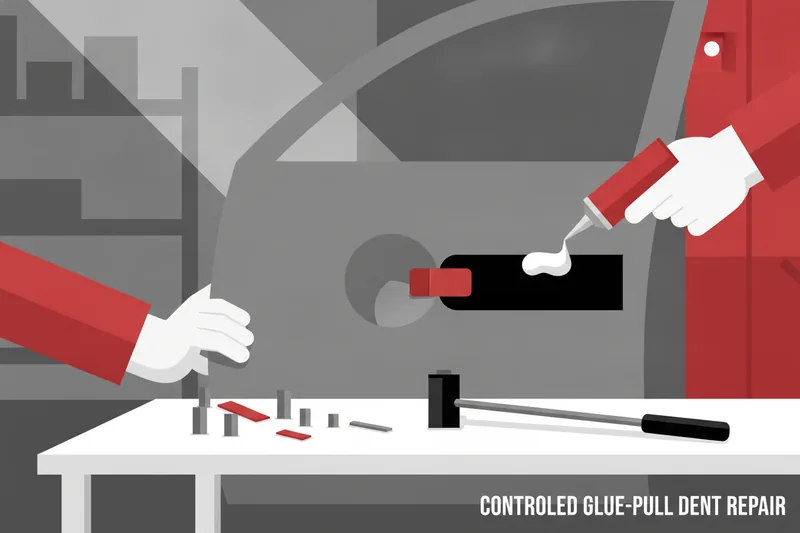
PDR cold glue is the reusable, tacky pulling compound that lets a technician bond a tab to a dent and pull the metal back into shape from outside the panel — no drilling, no repainting. Choosing the right one comes down to three things: matching the compound to your shop's actual temperature, prepping the surface so it grips instead of slipping, and knowing how long to wait before the next pull. Glexo builds its cold glue systems around exactly that workflow, with temperature-matched formulas paired with tabs sized for hail, micro, and general repair jobs. This guide covers the mechanism, the cold-vs-hot decision, temperature selection, application, cure time, and removal, then maps each choice to a kit.
What Is PDR Cold Glue?
Cold glue is a single, ready-to-use tacky or viscoelastic compound applied to a PDR tab — a small disc that becomes the contact point between the pulling tool and the dent. It isn't a two-part or cold-curing structural adhesive, and it isn't a cartridge-and-gun system the way panel adhesive is. The technician spreads a measured amount onto the tab, seats it over the low point of the dent, and lets the compound tack before attaching a pulling tool.
Because the bond only has to hold for one pull cycle, it's engineered to release cleanly afterward — which is what makes it reusable rather than disposable. "Paintless" describes the outcome, not the absence of materials: cold glue, cleaners, and release products are all normal parts of a glue-pull workflow without breaking that definition. Paint safety comes down to prep and removal technique, not the glue itself.
Cold Glue vs Hot Glue: Key Differences
Hot glue sticks are melted in a glue gun and bond as they cool over several minutes — typically under 10 minutes, often shorter in cold conditions — producing rock-solid adhesion capable of generating serious pulling force on stubborn, deep dents. Cold glue skips the melting step: it's applied at room temperature by hand and removed without a heat gun. That difference drives the use-case split. Hot glue's strong bond suits sharp, pinpoint dents where a small tab needs to grab hard. Cold glue suits broader, shallower work — hail damage, crown areas, repeated pulls across one panel — where a technician is reapplying tabs constantly and can't wait several minutes for a gun to melt and cool between pulls.
There's no fixed order between the two methods; which comes first, or whether a job uses only one, depends on the damage and the repair plan, not an industry-standard sequence. Some hybrid repairs combine cold glue for initial movement with hot glue for fine, high-force finishing pulls on the same panel. Neither method is a downgrade of the other — they solve different geometry.
Choosing the Right Cold Glue for Ambient Temperature
Cold glue's tack and stiffness shift with temperature, which is why lines are typically split into ranges rather than sold as one formula for every shop: a softer variant for ambient conditions up to about 86°F/30°C, and a firmer variant above it. Below the threshold, the softer compound stays workable and grips well; above it, that same compound can soften too much, lose hold under load, or smear instead of pulling cleanly.
A glue gun's temperature dial isn't a substitute for this decision — the gun's set temperature says nothing about actual panel surface temperature or real bond temperature, both of which govern tack. That's a hot-glue point, but the logic carries over: it's the panel's actual temperature on the day of the job, not the label, that decides which cold-glue variant will hold. Adhesives generally lose stability as temperature rises — softening, creeping, or failing to hold load the way they do at moderate temperatures. Check panel surface temperature, not just room temperature, and switch to the higher-range formula once you're consistently working above 86°F/30°C.
How to Apply Cold Glue for Dent Pulling
Surface Preparation for Better Adhesion
Adhesion starts before glue ever touches the tab. Wash off wax, grime, and silicone dressing, then wipe the repair area with a dedicated surface-prep product — Glexo's SPS wipes are built for this kind of deep clean, cutting through residues a shop rag leaves behind so the compound bonds to clean paint rather than a film of contaminant. Older paint, ceramic coatings, and protective films all reduce tack if left unaddressed, and skipping this step is the most common reason a tab lets go mid-pull.
Step-by-Step Tab Application and Pulling
- Confirm the panel and finish suit exterior glue pulling rather than backside access.
- Spread an even layer of compound across the tab face — thickness and distribution both affect how the pull responds.
- Center the tab over the lowest point of the dent and press with firm, even pressure; let it tack for the time the instructions specify.
- Attach a slide hammer or lifter and apply smooth, steady outward force, working the metal back toward its contour from outside the panel rather than pushing rods from behind.
- Reserve cold glue for broad, shallow work and hail damage; hand off very deep, pinpoint dents to hot glue's sharper pulling power.
Stop and reassess if the finish changes color or texture, adhesion feels inconsistent, a secondary crease appears, or the pull drags surrounding metal into a new high spot.
How Long Does PDR Cold Glue Take to Cure?
Cure time for cold glue is really tack time — how long the compound needs to grip firmly before it can take a pull — and it depends on the specific product, ambient and panel temperature, and layer thickness. Warmer conditions tack faster; colder conditions need more patience, which is exactly why temperature-matched variants exist.
Read manufacturer set-times carefully. Glexo's Magic Set V2 protective coating, for example, states it becomes solid in around 15 seconds, but that describes reaching a solid state, not full cure or full hardness — hardness keeps building as the material cools. Treat any quoted time the same way: it tells you when it's safe to load the tab, not when the chemistry is finished.
Is PDR Cold Glue Reusable? Removing Glue and Tabs Safely
Cold glue is meant to be reused across many pulls, not discarded after one — but that depends on keeping it clean, stored correctly, and used within its rated temperature range; a contaminated or overworked batch won't grip as reliably as fresh compound. Because it doesn't require a heat gun to release, a well-maintained cold glue should peel off the panel by hand, leave no residue, and go straight back onto the tab.
If it doesn't peel cleanly — if it strings, tears, or leaves a film — the compound has picked up contamination or exceeded its working life. Clean the tab thoroughly or replace the glue rather than risk dragging residue across the clear coat on the next pull.
Best Cold Glue Kits and Tabs for Professionals
Once you know your shop's typical temperature range and the damage you handle most, the kit choice follows directly. Glexo's general-repair cold glue and tab systems cover everyday dent work with the temperature-tiered formulas described above, so you order the variant matching your bay instead of guessing.
Hail kits are built around volume: redundant tabs and a cold-glue system so a technician isn't stopping mid-vehicle to source another tab or clean one that isn't ready. Micro kits scale the same approach down to small tabs for tight, minor dents where a full-size tab would overlap sound metal.
One compatibility note before ordering: cold glue doesn't need a dedicated glue gun the way hot glue does — it's applied by hand to a compatible tab and pulled with a slide hammer or lifter, so there's no gun hardware to budget for. Match tab neck and adapter to the puller you already own and the kit slots straight into your existing setup.
Tips to Improve Glue Adhesion and Avoid Pushmarks
Treat cleaning, adhesion promotion, and glue removal as separate jobs even when one product handles more than one role — conflating them is a common source of weak bonds. Before every pull, check compatibility across the chain: finish to cleaner, adhesive to tab, tab to panel, tab neck to adapter, adapter to puller. Be extra cautious on unknown refinishes, filler, cracked coatings, matte or satin finishes, ceramic coatings, wraps, or PPF — all reduce adhesion. A double-panel dent doesn't automatically qualify for glue pulling either; finish and geometry limits still apply. And don't tuck the storage release film between compound and panel during a pull — it's for storage, and doing so is a documented cause of failed adhesion.
FAQ: Quick Answers on PDR Cold Glue
Is PDR cold glue reusable? Yes, within the product's condition and temperature limits — clean compound peels off and goes straight back onto the tab.
How long does it need to cure? Long enough to tack firmly before a pull; exact times depend on temperature and product, so always check the instructions.
What's the best cold glue? There's no single best formula — properties are product-specific, so the right pick matches your ambient temperature and damage type.
Shop Glexo's temperature-matched cold glue systems and tab kits, built for hail, micro, and general repair work, with worldwide shipping and discounts for regular customers.