Best PDR Glue for Pros | Choose Hot or Cold
What Makes a PDR Glue "Best"? Strength, Temperature Range, and Removability
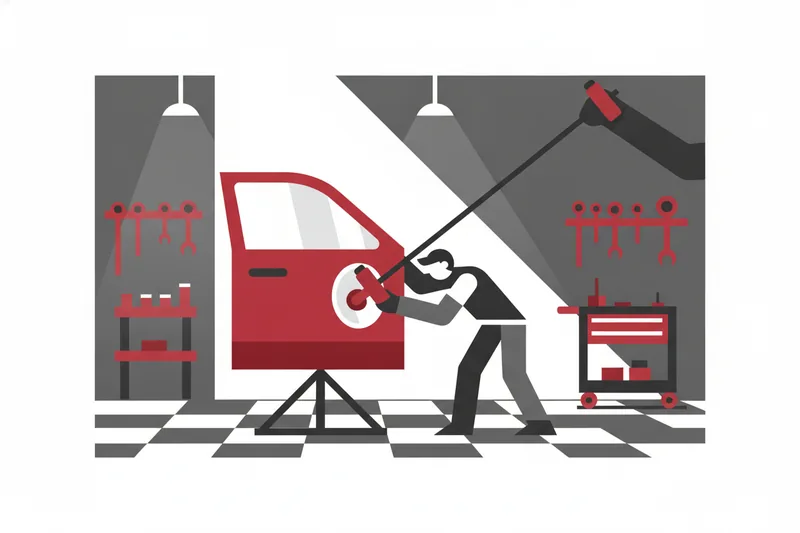
PDR glue doesn't fix a dent by itself — it creates a temporary attachment point on the panel so a slide hammer, mini lifter, or lever can transfer pulling force to the metal until it returns to shape. That attachment happens through a glue tab, a small plastic or metal disc bonded to the dent's low point, which becomes the contact surface for the pulling tool. Whether that bond holds, adapts to your shop's temperature, and comes off cleanly afterward is what separates a glue that works from one that fights you all day.
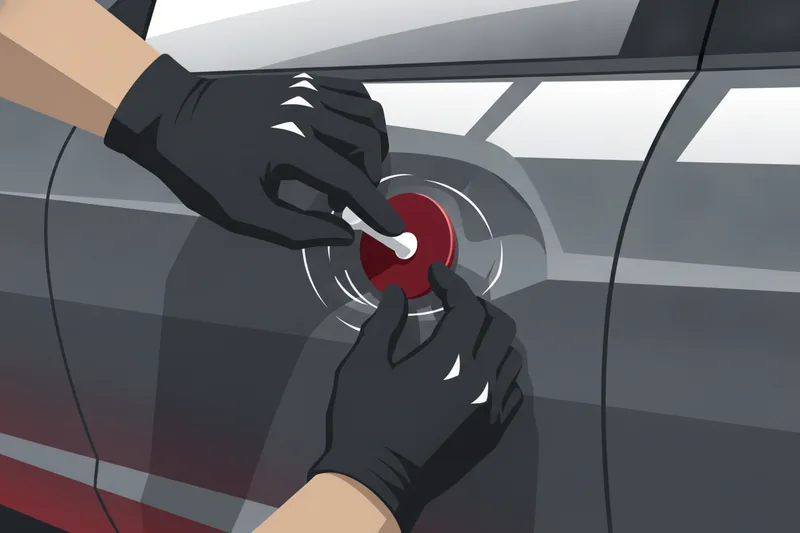
Three specs decide that, not the brand name on the label:
- Pull strength — how much force the bond withstands before it releases from the panel. Too little, and the tab pops off mid-pull; too much, and removal risks marking the clearcoat.
- Temperature working range — the ambient conditions the glue is formulated for. A glue that tacks perfectly at 60°F may turn soft and lose grip at 95°F.
- Removability — how cleanly the compound or tab comes off after the pull, without leaving residue or requiring aggressive solvents.
A fourth factor, tack time — how fast the glue reaches a workable bond after application — determines your actual throughput on the bay, especially on repetitive hail work. Glexo builds its cold-glue systems and metal tabs around these four variables directly, formulating separate glue variants for different ambient ranges rather than selling one compound and calling it universal. That's the framework this guide uses instead of ranking products by popularity.
Hot Glue vs Cold Glue for PDR: Which Should You Use?
PDR glue splits into two families with different cure mechanisms, and neither is a universal replacement for the other. Hot glue pulling bonds a tab to the exterior finish using a melted, PDR-specific hot-melt adhesive; the pull force travels through a chain from the pulling device through the tab and adhesive into the panel skin. Cold glue pulling uses a reusable, tacky or viscoelastic compound applied straight to a compatible tab, without a glue gun or heating step.
When hot glue makes sense
Hot glue delivers rock-solid adhesion and can generate substantial pulling force, which is why it's often the better choice on stubborn, deep, or pinpoint dents where cold glue's broader compound lacks the sharp, concentrated grip needed. It's also the default when the tab needs to sit precisely over a small dent center rather than spread across a wider area.
When cold glue makes sense
Cold glue tends to suit large, shallow dents, heavy hail damage, and crown manipulation, where broad, even pull across the panel matters more than pinpoint force. Because the compound is reused rather than melted fresh for each tab, cold glue also fits repeated-pull hail workflows and hybrid repairs where you're alternating between pulling and backside pushing without resetting a glue gun each time. There's no fixed rule that one method must come before the other in a repair sequence — plenty of technicians move between both on the same panel depending on what the dent needs.
Glue gun compatibility also plays into this decision: a gun rated for one adhesive's melt temperature won't necessarily perform correctly with another brand's stick, so hot glue selection is tied to your existing gun as much as to the dent itself. Both methods carry some pushmark risk if pull force isn't controlled, which is a tooling and technique issue as much as a glue one.
Best PDR Glue Sticks by Color and Temperature Range
Hot glue sticks are commonly sold in yellow, black, and amber, and a lot of shop talk treats those colors as a shorthand for hardness or temperature performance. Treat that shorthand with caution: stick color is not a standardized industry classification, and a glue gun's temperature dial setting from one brand does not carry over to another brand's stick. Two "black" sticks from different manufacturers can behave completely differently at the same gun setting.
The practical takeaway is to buy glue sticks by their stated working temperature range and hardness rating on the spec sheet, and to re-calibrate your gun setting whenever you switch manufacturers rather than reusing a number that worked before. Softer sticks generally flow and release faster but hold less force; harder sticks grip tighter and suit deeper pulls but take longer to soften for tab removal. Match that behavior to the dent, not to the color in the packaging.
Best Cold Glue Systems for Tab Pulling
Once you're working with cold glue, ambient temperature becomes the deciding variable rather than the dent itself. Glexo's cold-glue line is split by working range — one variant formulated for shop temperatures up to 86°F (30°C), and a firmer variant built for conditions above that threshold — so the compound keeps consistent tack whether you're in a heated winter bay or an un-air-conditioned summer shop.
These systems pair with metal tabs sized for the job at hand:
- General repair kits — standard tab assortments for everyday panel work.
- Hail kits — larger tab counts built for continuous, repeated pulls across a hail-damaged panel.
- Micro kits — smaller tabs for tight-radius or precision dents where a full-size tab would overlap sound metal.
Choosing the wrong temperature variant for your shop is one of the most common reasons cold glue feels "unreliable" — the compound itself isn't failing, it's simply outside its intended range.
How to Get PDR Glue to Stick Properly: Surface Prep Steps
Most adhesion complaints trace back to the panel surface, not the glue. Contaminants, wax, older paint layers, or factory protective coatings all reduce the contact a tab or hot-melt adhesive can make with the finish. Before applying any glue, the surface needs ultra-deep cleaning that goes beyond a standard wipe-down — this is where Glexo's SPS disposable wet wipes are used, specifically to strip residue from contaminated or protected paint surfaces so the adhesive bonds to clean paint rather than a film sitting on top of it.
A simple workflow:
- Clean the repair area with an SPS wipe, working slightly beyond the dent boundary.
- Let the surface dry fully before applying glue or firing the glue gun.
- Apply the glue tab immediately after prep — recontamination from handling or airborne dust reduces tack fast.
On older paint or vehicles with ceramic or protective coatings, skipping this step is the single most common cause of a tab releasing mid-pull.
Glue Compatibility with Guns, Tabs, and Ambient Conditions
Consistent pulls depend on three things lining up: the glue gun, the tab, and the room you're standing in.
- Glue gun compatibility — a hot-melt stick needs a gun capable of reaching and holding its specified melt temperature; as noted above, don't assume a dial setting transfers between brands.
- Tab compatibility — tab size and shape need to match both the dent geometry and the glue's bonding footprint; an undersized tab on a large cold-glue pull reduces effective pull strength even if the compound itself is fine.
- Ambient temperature adaptation — shop conditions should drive which cold-glue variant is loaded that day. A shop running warm in summer needs the higher-range formula; a cooler winter bay performs better with the standard range.
Treat these as one system rather than three separate purchases — a mismatch in any one of them shows up as unreliable pulls, even when the glue itself is a good one.
Best PDR Glue for Hail Repair: High-Volume Tab Systems
Hail work punishes glue systems differently than single-dent repair: the same technician might place and pull dozens of tabs in a single panel, and downtime spent re-gluing or waiting on tack directly costs billable hours. This is where cold glue's reusability matters most — the same compound goes back onto tab after tab through a shift, rather than requiring a fresh melt cycle for every pull.
Hail-focused kits are built around that reality: higher tab counts so a technician isn't stopping to clean and reload mid-panel, and glue formulated to hold tack through repeated, rapid placements rather than a single careful application. Redundant tabs — having more on hand than the immediate job needs — keep a high-volume shop moving without a supply run mid-repair. For shops running hail season as their primary revenue window, the glue and tab system is as much a throughput decision as a repair-quality one.
Top PDR Glue Picks Compared
Names like Cactus Green, Brazilian Gold, Tab Weld, and Mega Power circulate heavily in PDR forums, and technicians often pick based on which one a mentor used rather than what the spec sheet says. A color or brand name alone doesn't tell you pull strength, temperature range, or removability — the three criteria from the top of this guide still apply regardless of label.
| Criterion | Hot glue sticks | Cold glue systems |
|---|---|---|
| Pull strength | High, concentrated on small tab area | Strong across broad or shallow dents |
| Temperature range | Fixed per stick formulation; check spec, not color | Variant-based (e.g., up to 86°F/30°C vs above) |
| Removability | Requires re-melting/softening to release tab | Compound peels and reapplies without a gun |
| Best fit | Deep, pinpoint dents | Large panels, hail, repeated pulls |
Glexo's cold-glue systems and hot glue sticks are built to these same measurable criteria — the point of this comparison isn't to declare one brand superior, but to give you a way to evaluate any glue system, Glexo's included, against your actual working conditions rather than a forum recommendation.
FAQs
How do I get PDR glue to stick reliably? Clean the panel thoroughly before application — an SPS wipe or equivalent deep-clean step removes wax, residue, and coating film that block adhesion, especially on older or protected paint. Apply the glue immediately after the surface dries.
Is hot glue or cold glue better for PDR? Neither is universally better. Hot glue suits deep, pinpoint dents needing concentrated pull force; cold glue suits large, shallow damage and repeated-pull hail work where reusability matters.
Which glue should I use in cold weather? Match the glue to your actual shop temperature rather than the season. For cold glue, use the variant formulated for lower ambient ranges (up to roughly 86°F/30°C); for hot glue, verify the stick's stated working range rather than assuming a colder shop needs a different color.
How do I remove excess glue after a pull? Removal method depends on the specific glue's chemistry — hot-melt residue typically needs its intended release process (often gentle reheating), while cold glue compounds are designed to lift and be reused per the product's instructions. Follow the manufacturer's specified removal steps rather than a generic solvent, since this varies by product.
Shop Glexo's cold-glue systems and hail-repair kits — built for consistent tack strength across working temperatures — and ask about discount pricing for regular professional customers.