Best PDR Tools for Professionals | Glexo
Paintless dent repair doesn't have one "best" tool — it has a best tool for the mechanism you're using and the dent you're facing. A technician pulling a door ding with a glue tab needs a different tool than one pushing a crease from behind a quarter panel, and the sonic tip that clears a rocker panel is useless on a hood skin. This guide sorts the category by method — glue pulling, rod access, sonic work, knockdown/blending, and surface prep — so you can match tool to job instead of chasing star ratings.
What Is Paintless Dent Repair, and Which Tools Actually Do the Work?
Paintless dent repair (PDR) is a set of professional methods for restoring a damaged panel's shape through controlled metal movement, while keeping the panel's existing, still-serviceable finish intact rather than sanding, filling, and repainting it. "Paintless" describes that outcome, not an absence of materials — cold glue, hot-melt adhesive, cleaning agents, and release films are all standard parts of the process.
The tool families that do most of this work include PDR rods and whale tails (long metal rods used to push dents out from behind the panel), glue pulling systems (tabs bonded to the outside of the panel and pulled with a lifter or slide hammer), knockdown tappers and blending hammers (used to settle high spots and finish metal after the main pull or push), and sonic tips (interchangeable heads used with power tools for internal, hard-to-reach areas). These four cover the bulk of method-level decisions a technician makes, though a working shop also keeps picks, wedges, and other access tools on hand for specific jobs. Reliable adhesion is the deciding factor for every glue-based method, which is one reason Glexo builds its cold-glue tab systems and surface-prep wipes around consistent bonding rather than just raw pulling strength.
The two core repair mechanisms: pushing from behind vs. pulling from the surface
Most PDR repairs use metal rods and picks pushed in from the panel's underside, or glue and tabs pulled from the outside when the backside is blocked. Both approaches require an intact paint surface — stretched metal, existing paint damage, or a previously repainted panel can all compromise the repair.
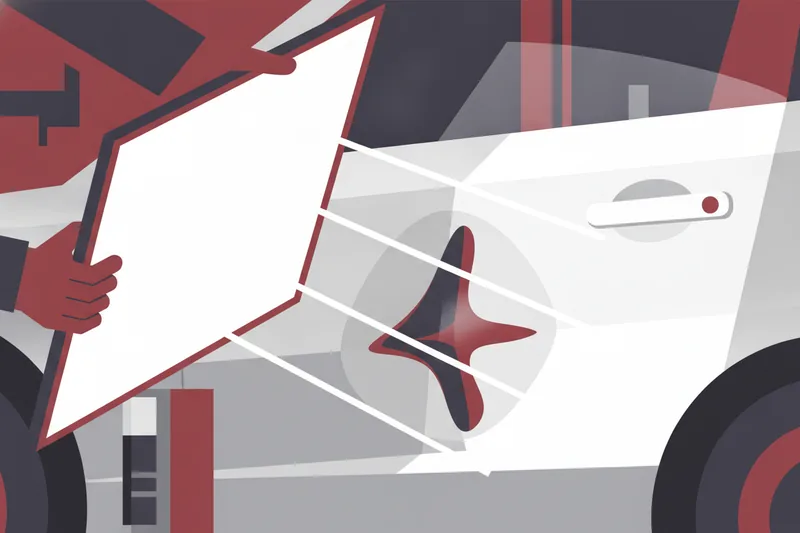
Why the reflector board matters for reading dent shape before you pick a tool
A PDR light or reflector board projects light lines across the panel so a technician can see the dent's true depth, edges, and highs/lows before choosing a tool. Skipping this step is the most common reason a technician reaches for the wrong rod, tip, or glue tab and ends up chasing the dent instead of correcting it in fewer passes.
Glue Pulling vs. Rod-Based PDR Tools: The Core Method Decision
The single decision that shapes the rest of your toolkit is access: can you reach the back of the panel, or not? Rods and whale tails push from behind and remain the default when access is open. Glue pulling systems work from the outside, bonding a tab to the dent and using a slide hammer or mini lifter to draw the metal back into shape.
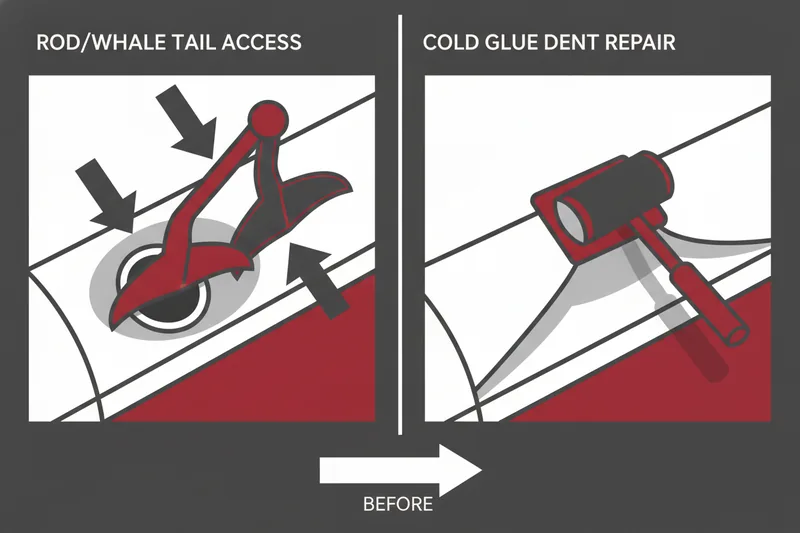
When rod access (whale tail, door lord) beats glue pulling
A door lord is a specialized rod/leverage tool built for door-panel access through factory gaps and holes. When that kind of backside access exists, rod-based work is usually faster and needs no adhesive cure time or cleanup. Rods and whale tails stay the first choice whenever the panel's rear is open and reachable.
When cold-glue tabs and a slide hammer are the faster, safer choice
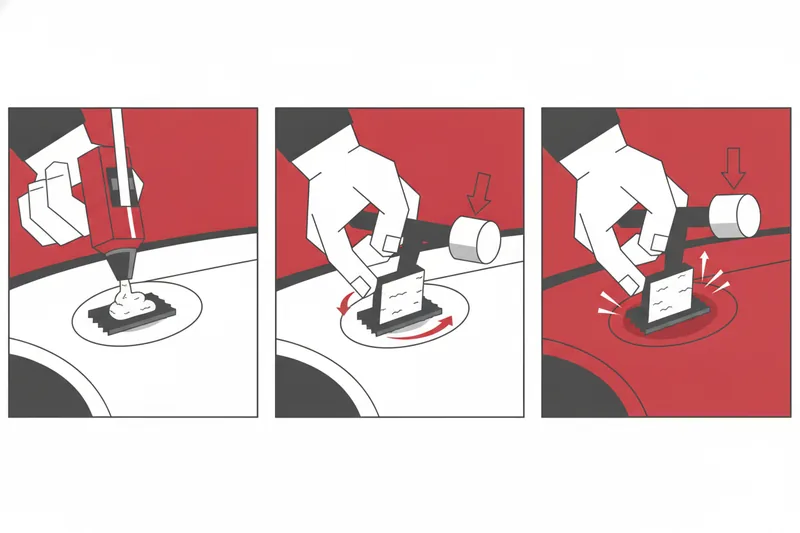
Glue pulling earns its place when the rear of the panel is sealed off entirely — double-skinned panels, structural cant rails, sections blocked by internal bracing, or aluminum panels where rods can't get behind the damage. It's also the better call on large dents or creases where conventional rod work falls short, and expanded cold-glue and tensioning techniques have made even deep, stretched-metal dents repairable that used to be written off. A basic glue-pull kit combines a glue gun, adhesive, a set of pulling tabs, and a lifter or slide hammer — read the dent under a reflector board first, then choose rod or glue based on what the light lines tell you about access, not habit.
Best Sonic Tips and Where Each Type Excels
Sonic tips are interchangeable heads driven by a power tool, used mainly for internal-access dents where rods and glue tabs can't get proper leverage. Shape and hardness decide the outcome far more than brand does.
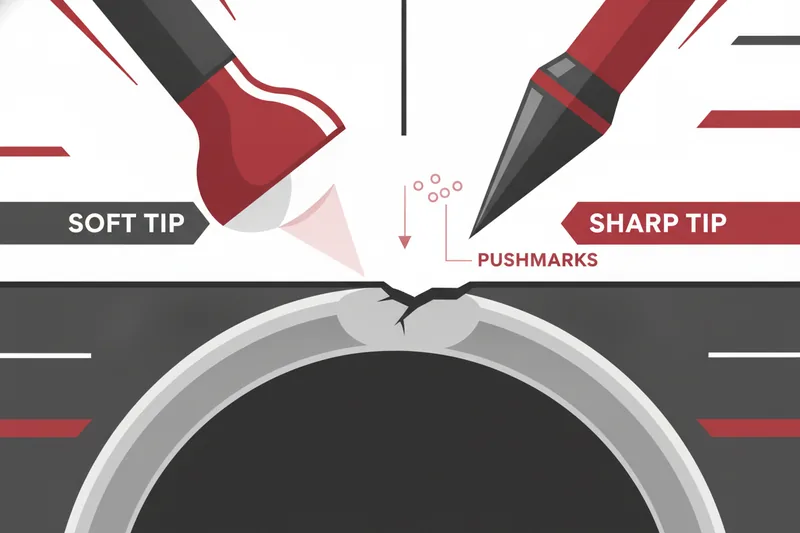
Soft, rounded tips for controlled pressure work
Soft, rounded tips spread force over a broader area and are the safer default for general internal work — they settle metal gradually and reduce the risk of overworking a panel.
Sharp tips for edge and tight-access strikes
Sharp tips concentrate force into a smaller point, useful for edges, tight creases, and areas a rounded tip can't seat against properly. The trade-off is control: sharp tips demand a lighter touch and shorter strikes, since concentrated force is exactly what causes pushmarks (small raised marks from excess metal movement) and light-shift distortion if overused. Matching tip shape to the dent — soft for broad settling, sharp for defined edges — is what separates a clean finish from a panel that needs a second pass.
Best PDR Knockdown and Blending Tools for Precision Finishing
Once the bulk of a dent is pulled or pushed, knockdown tappers and blending hammers do the finishing work — settling remaining high spots without disturbing the paint layer.
Choosing knockdown tapper tip size for detail accuracy
Knockdown tappers use mirror-polished tips in graduated sizes, and tip size should scale to the size of the remaining imperfection: smaller tips for pinpoint high spots and detail work, larger tips for broader, shallower areas. A mirror finish matters here because any roughness on the tip transfers directly to the paint surface underneath.
Choosing blending hammer weight for controlled metal movement
Blending hammers come in multiple weights, and weight controls how aggressively metal moves per strike. Lighter hammers give finer control for finishing passes near the edge of a repair; heavier hammers move more metal faster, which suits broader areas earlier in the repair before precision matters as much. Choosing weight by task — not defaulting to one hammer for everything — is what keeps a finishing pass from turning into rework.
Best Cold-Glue PDR Systems and Hail Dent Kits
Cold-glue pulling uses a reusable, tacky compound applied to a pulling tab rather than a melted adhesive, and — condition and product instructions permitting — that same glue can typically be reused across multiple pulls. It suits broad initial movement, hybrid repairs alongside backside pushing, and specialized hail workflows where the same pull gets repeated many times over a single panel. Neither cold glue nor hot-melt adhesive is the fixed industry standard; which one a shop reaches for first depends on the job and the technician's workflow, not a universal rule.
Matching cold glue to ambient temperature for reliable tack
Cold glue behaves differently depending on ambient shop or field temperature, which is why formulations are typically split by working range — commonly up to roughly 86°F (30°C) and above that threshold. Using a glue matched to the actual temperature on-site, rather than whatever's on the bench, is what keeps tack and pull performance consistent instead of guessing at cure behavior mid-repair.
What a hail-repair glue kit needs for continuous, high-volume work
Hail work means dozens or hundreds of small pulls per vehicle, so a hail dent kit needs redundancy: enough metal tabs in common sizes that a technician isn't stopping to clean and reset a single tab between pulls, plus a glue matched to the day's temperature range and a slide hammer built for repeated cycles without fatigue. Kit composition matters more than any single tool here — a fast slide hammer paired with too few tabs still creates downtime.
Why Surface Prep Decides Whether Your "Best" Tool Actually Bonds
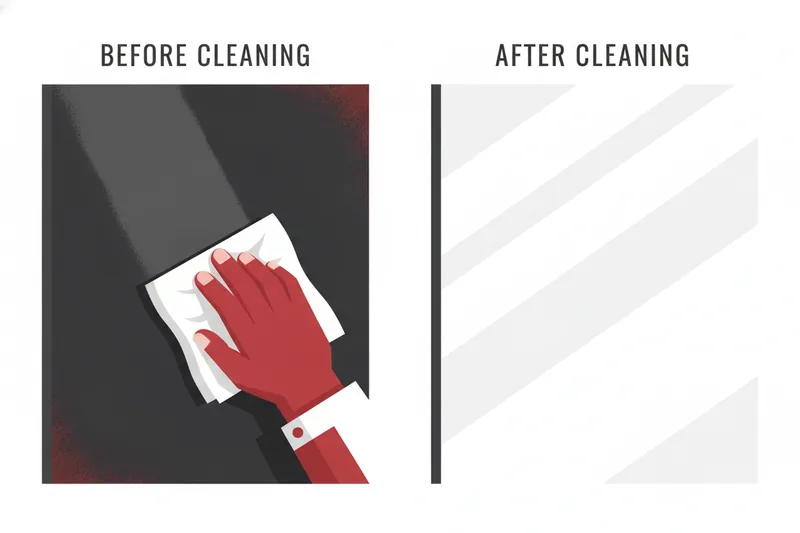
The best glue-pulling tool on the market fails if the tab doesn't bond properly, and bonding failure is almost always a surface problem, not a glue problem. SPS surface-prep wipes are disposable, wet wipes designed for deep-cleaning a panel before tab or stick application, and they matter most on older paint, protective coatings, or contaminated surfaces where standard cleaning leaves residue that weakens tack. Pairing thorough prep with an anti-adhesive film — a protective layer that keeps glue overspill or drips off adjacent, undamaged paint — protects the finish around the repair while the tab does its work. Skipping prep to save thirty seconds is the most common reason a "good" glue pull fails halfway through.
How to Choose the Right PDR Tool Kit for Your Shop (Buying Guide)
Kit composition should follow the repair mix your shop actually sees, not a generic parts list.
Building a starter professional kit vs. a high-volume hail kit
A beginner PDR kit for a technician building their first professional setup typically centers on one glue-pulling system with a mid-range slide hammer, a small assortment of metal tabs in common sizes, one or two blending hammer weights, and a reflector board for reading dents accurately from day one. A high-volume hail kit scales the same core components up: more tabs per size, glue in both temperature variants so weather doesn't stall work, and enough sonic tips and knockdown sizes to move between vehicles without swapping heads mid-job.
Signs a tool is built for durability and repeat use
Look for mirror-polished, corrosion-resistant tips on knockdown tools (surface roughness there transfers straight to paint), hammer heads that hold their weight balance after repeated strikes, and glue systems backed by a manufacturer warranty — a sign the maker stands behind adhesion performance rather than just listing a spec sheet.
FAQs About PDR Tools
Is glue pulling or rod-based PDR the "better" method overall? Neither is universally better — the panel decides. Rods win when the backside is open and reachable; glue pulling wins when it's sealed, braced, or aluminum and rods can't get behind the damage.
How do I choose between soft and sharp sonic tips? Use soft, rounded tips as your default for internal access and general settling work, and switch to sharp tips only for edges or tight creases where a rounded tip can't seat — sharp tips need a lighter touch to avoid pushmarks.
What temperature ranges do cold glue variants cover? Cold glue is typically formulated in ranges such as up to roughly 86°F (30°C) and above that threshold, since tack and pull behavior shift with ambient heat. Match the variant to the day's actual working temperature rather than a fixed rule.
How many tabs and how much glue should a hail kit carry? Enough of each common tab size to avoid cleaning and reusing a single tab between every pull, plus glue in both temperature ranges — hail jobs run long, and conditions can shift from morning to afternoon.
Browse Glexo's professional PDR tools and cold-glue systems, or contact our team for regular-customer discount pricing on kits and bulk consumables.