AutoZone Slide Hammer vs. PDR Glue Systems
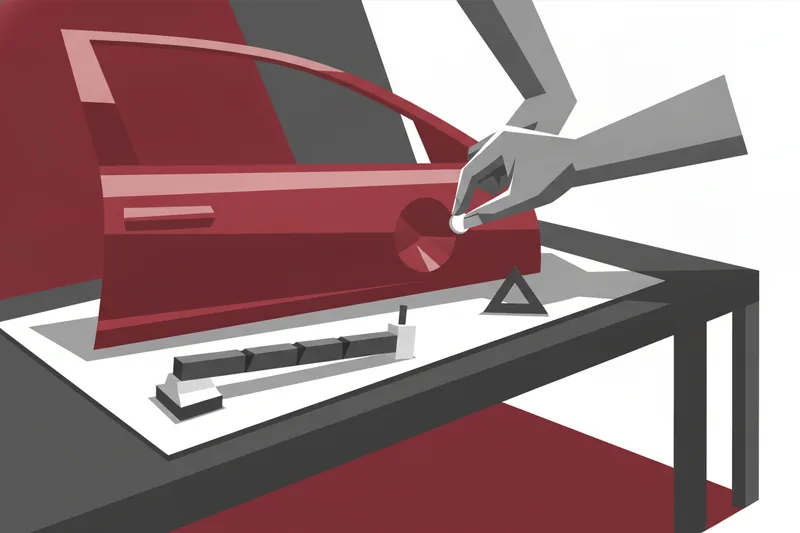
The AutoZone slide hammer sold in stores and through its Loan-A-Tool program is a general automotive tool designed to pull pressed-fit components like bearings, CV axles, and harmonic balancers — it is not built or rated for panel-safe dent removal. Understanding what this tool actually does, and how it differs from PDR-specific pulling equipment, matters before a technician spends money or a rental deposit on the wrong device.
What Is a Slide Hammer and How Does It Work
A slide hammer is a simple mechanical tool: a weighted sleeve rides along a steel shaft, and when the operator yanks it backward and lets it strike a fixed stop at the end, the impact transfers an outward pulling force through whatever is attached at the other end. The attachment determines the job. A jaw puller / bearing puller clamps onto a bearing race or hub and uses that impulse to break the press fit. For CV axle removal, a slide hammer with the right adapter pulls the axle shaft free of the transmission or hub without prying or hammering directly on delicate splines. A harmonic balancer puller threads onto the balancer hub and uses the same sliding-weight action to draw the balancer off the crankshaft nose evenly, avoiding the bending force a pry bar would apply. In every one of these cases, the tool is moving a rigid, press-fit metal part off a shaft — not reshaping sheet metal. That distinction is exactly where confusion starts for anyone considering the same tool for dent work, and it's the gap that purpose-built PDR manufacturers like Glexo design around from the ground up.
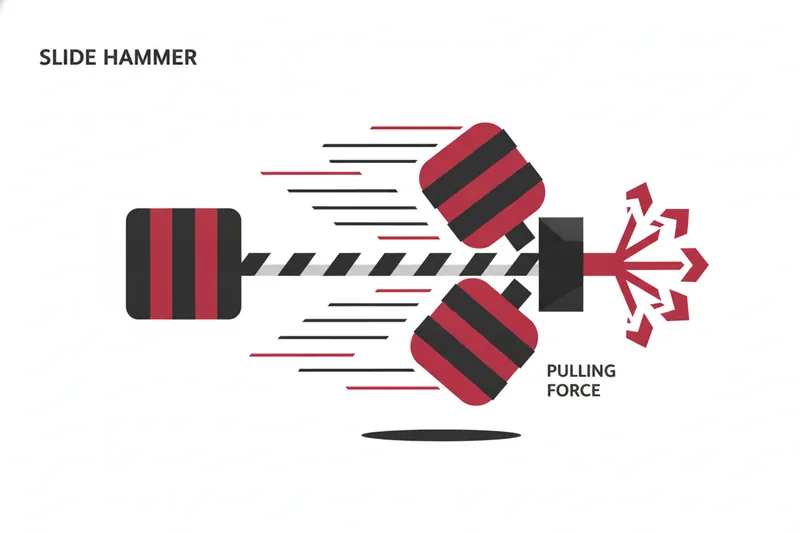
Types of Slide Hammers: Bearing/Axle Pullers vs. Dent Pullers
Retail slide hammers fall into two functionally separate categories, even though they share a name and a basic sliding-weight mechanism. The first is the bearing/axle slide hammer: a heavy-duty automotive tool sold under brands like OEMTOOLS, typically bundled with jaw pullers, slide adapters, and balancer attachments for general mechanical work. The second is the dent puller attachment category, built specifically for body work — these swap the bearing jaws for a hook, a suction cup, or a glue-tab mount, and they're engineered around sheet-metal deformation rather than press-fit removal. AutoZone's shelf and rental inventory is built almost entirely around the first category. That's not a flaw in the tool — it's simply not the job it was designed for.
Slide Hammer Thread Sizes and Attachment Compatibility
Automotive slide hammers standardize around a 5/8" x 18 thread, which is why a jaw puller and a harmonic balancer puller from the same kit can share one shaft and hammer body — you just swap the threaded attachment. This standardization is convenient for mechanical work but doesn't extend into PDR. A dent puller attachment designed for panel work typically uses a different mounting interface — hook-style, suction, or a dedicated tab post — because the load path and control requirements are different from pulling a bearing off a shaft. Glue-tab attachment compatibility is a separate consideration again: cold-glue tabs are bonded to a specific tab-holder geometry matched to the glue system and pulling device, not to a generic 5/8" threaded shaft. Buying a slide hammer for its thread size and assuming it will accept PDR attachments is a common and costly mistake.
Does AutoZone Sell or Rent Slide Hammers? (Loan-A-Tool)
Yes — AutoZone both sells slide hammer kits (often OEMTOOLS-branded, packaged with jaw pullers and balancer attachments) and makes them available through Loan-A-Tool, its in-store tool loaner program. Under Loan-A-Tool, a customer pays the retail price of the tool as a deposit, uses it, then returns it for a refund, which effectively functions as a short-term slide hammer rental/loaner rather than a true rental. Slide hammer price for these automotive kits sits in the entry-to-mid range typical of general mechanic's tools — inexpensive relative to dedicated shop equipment, which is part of why the "can I just use this for dents" question comes up so often. Where to buy is straightforward: any AutoZone retail location or its website. What isn't included in that purchase or loan is any PDR-rated attachment, glue system, or panel-safe control mechanism.
Slide Hammer Use in Automotive Repair vs. Paintless Dent Repair
In automotive repair, the slide hammer's job is to break a press fit or bearing seat — the part being pulled is rigid, and a sharp impulse is exactly what's needed to overcome static friction. In paintless dent repair, the workpiece is a thin, elastic steel or aluminum panel, and the goal isn't to break anything free — it's to guide deformed metal back toward its original contour without cracking paint or creating new damage. A slide hammer only becomes part of a legitimate PDR workflow when it's paired with a nondestructive, PDR-compatible attachment and process; used with the same instant, high-impulse action, a slide hammer functions in PDR as an inertial pulling device, and that impulse produces a short, high-magnitude load rather than the sustained, metered tension a bridge or lifter-style puller applies. That difference in control profile carries real risk: an impulse pull is harder to moderate mid-pull and carries a higher chance of overpulling compared to a mini lifter's localized, metered lever action. Overpull, or an off-axis pull, can raise adjacent metal or leave a small proud spot on the panel — commonly called a pushmark — that requires additional correction. Panel safety in PDR means the tool must let the technician stop precisely when the metal reaches its original plane, not just when the attachment breaks free.
Alternatives to a Generic Slide Hammer for Dent Pulling
For technicians who need to pull dents from the outside of a panel — because the backside is inaccessible behind bracing, a double-skinned section, or structural reinforcement — the standard professional approach is a cold glue tab system rather than a repurposed automotive slide hammer. Cold glue pulling uses a reusable, tacky compound applied to a pulling tab, which bonds to the panel surface and is then drawn out with a compatible pulling device; the compound is generally retained and reused across pulls as long as it stays in good condition. A typical glue-pulling kit brings together a glue gun or applicator, tabs in several sizes, and a lifter or slide-hammer-style pulling device matched specifically to that tab system, which is a very different setup from a bearing puller adapted with a hook. This is also the basis of dedicated hail repair kits, where the slide-hammer-style pulling role in a kit has a documented place in hail and roughing work — though it isn't limited to any single dent size, and lighter variants are used for more precise pulls. Because ambient temperature changes how tacky glue behaves, professional cold glue is formulated in temperature-specific ranges rather than one universal blend. On a hail job or a multi-dent panel, working with redundant tabs — several bonded and ready — keeps a technician moving between pulls instead of stopping to re-glue, which lowers the odds of an unplanned, off-axis pull and the pushmark risk that comes with it.
Why PDR shops choose owned, purpose-built systems over one-time mechanical pulls
A rented automotive slide hammer is a one-off borrow for a single mechanical job. A PDR cold-glue system is shop equipment used daily, across dozens of panels, which is why professional technicians and hail-repair shops own rather than rent theirs. Neither cold glue nor hot-melt glue pulling is the universal industry standard — the right choice depends on the job, panel access, and shop workflow — but both exist specifically to move sheet metal without damaging the finish, including stretched-metal cases that once fell outside what paintless repair could reliably fix. That capability, not the pulling mechanism alone, is what separates PDR equipment from a mechanic's parts puller.
Choosing the Right Tool for Your Shop: FAQ
Renting vs. owning tools: A Loan-A-Tool slide hammer makes sense for a one-time axle or bearing job. It doesn't make sense as shop infrastructure for a business pulling dents daily — a high-volume or hail-repair shop needs equipment it can restock and cycle through repairs without a return trip to a parts counter.
Throughput for high-volume shops: Hail season and large-batch jobs reward having enough prepped tabs and glue on hand to keep pulling continuously rather than pausing for a single borrowed tool.
Surface prep before pulling: Reliable adhesion depends on a genuinely clean surface — contaminants, wax, or protective coatings on the paint weaken the tab bond regardless of which glue or pulling device is used, which is why a dedicated cleaning step before gluing matters as much as the pull itself.
Is an AutoZone slide hammer good for dent repair? Not as sold. It's built and threaded for axle, bearing, and harmonic balancer removal, and its bare hook or clamp attachments aren't designed to control a panel-safe pull. It can only enter a PDR workflow when combined with a nondestructive, PDR-specific attachment and glue system — at which point a technician is really using a dedicated dent-pulling setup, not the automotive tool on its own.
If you're weighing a generic mechanical slide hammer against equipment actually built for panel work, compare Glexo's cold-glue tab systems and PDR-specific pulling tools to see why professional technicians choose purpose-built equipment over a borrowed automotive tool — and check current discounts available for regular customers.