PDR Glue Explained: Hot vs Cold Glue Systems
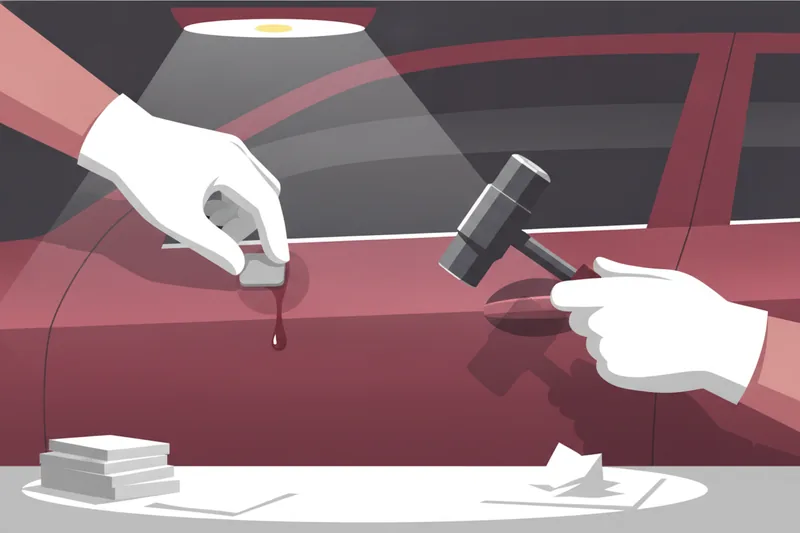
PDR glue is the adhesive that lets a technician pull a dent back into shape from the outside of a panel, without repainting it — a paintless dent repair (PDR) technique for dents where the backside is blocked and a rod can't reach it. Choosing between the two main systems, hot glue sticks and cold glue tab kits, comes down to how each sets, releases, and holds up across a shop's volume and climate, which is what the rest of this guide walks through.
What Is PDR Glue? Understanding the Glue-Pulling Method
Paintless dent repair restores a dent's shape by working the metal, not by filling or refinishing the panel. When the backside is inaccessible — a double-skinned panel, internal bracing, or a sealed cant rail — a technician can't push from behind, so the pull happens from outside instead.
That's the job of a glue tab (an exterior bonded attachment through which pull is transferred): PDR glue temporarily bonds it to the dent's high point, and a slide hammer (an inertial pulling device) or mini lifter draws the metal back out until it returns to shape. This is the glue-pulling method, and it splits into two mechanisms: hot glue pulling, which bonds a tab with a heated adhesive stick and a pulling device, and cold glue pulling, which uses a ready-to-use tacky compound instead of heat. Neither is a universal standard, and one doesn't automatically replace the other on a given job. Choosing between them is exactly where shops stocking Glexo's cold-glue tab systems and hot glue sticks start — matching the adhesive to volume and climate rather than habit. One more distinction worth keeping straight: Glue Pull Repair (GPR) is I-CAR's name for a specific straightening technique, not a blanket synonym for every PDR glue pull.
Hot Glue Sticks vs Cold Glue Systems: How They Differ
Hot glue sticks melt in a dedicated glue gun and bond a tab to the panel's exterior finish; once the pull is done, the bond is released with heat or a compatible solvent and any residue is cleaned off. Hot glue's adhesion is genuinely strong — it can generate serious pulling force on stubborn creases, so it isn't a weaker fallback sitting next to cold glue. Sticks and guns are formulated as a pair, so glue-gun compatibility is real: stick and gun perform best when they come from the same system rather than being mixed freely.
Cold glue works differently. It's a reusable, putty-like tacky compound pressed directly onto a compatible tab — no glue gun, no heat gun involved. It doesn't "dry" the way hot glue cools; instead it's worked onto the tab and pressed into place. After the pull, the compound generally peels off the panel clean and goes back onto the tab for the next pull, as long as it still meets the product's condition guidelines. That reusability changes cleanup: instead of scraping hardened adhesive off the panel, a technician wipes the tab and reloads it.
Why Cold Glue Tab Systems Suit Hail and High-Volume Repair
On a hail job a technician may set and pull tabs hundreds of times in a day. A compound that gets reused pull after pull, without waiting on a gun to heat or a stick to melt, keeps that pace realistic. Cold glue pulling fits broad initial movement, repeated-pull hail workflows, and hybrid repairs that pair glue with backside pushing. There's no fixed rule that cold glue always precedes or follows hot glue on a job — the repair plan decides the sequence, not a checklist.
Choosing PDR Glue by Temperature Conditions
Cold glue's tack shifts with ambient temperature, which is why most cold-glue lines come in more than one variant: one formulated for shop conditions up to roughly 86°F/30°C, and a firmer, higher-hold version for work above that line. Glexo's cold-glue range follows this split, giving a summer-shop option and a cooler-weather option instead of one compound stretched across both.
Hot-melt adhesive behaves differently, since its working temperature depends on the specific stick and gun — PDR hot-melt properties and gun compatibility are product-specific rather than interchangeable across brands. Don't read a glue stick's color as a classification system, and don't carry a gun's temperature setting from one brand over to another — each system has its own calibration. If a job calls for supplemental heat to soften a stubborn bond, stop the moment temperature control becomes unreliable, the finish shows any change in gloss or texture, or OEM permission for heat near the repair can't be confirmed. And cold glue stays what it is regardless of season: a reusable pulling compound, not a cold-curing structural adhesive.
PDR Glue Color Guide: What Each Color Means
Manufacturers commonly color-code glue sticks and cold-glue compounds to flag viscosity — a softer shade for delicate panel work, a firmer one for higher-hold pulls. But that coding is set by each maker, not by an industry-wide standard, so a color meaning "soft" on one shelf can mean something else on another. Treat color as a quick sort within one product line, then confirm viscosity and tab pairing against that product's own guidance rather than assuming across brands.
Tab size matched to glue viscosity matters more than the color itself: a small tab under a high-viscosity compound can overload the bond point, while a large tab under a light compound may not pull evenly. The right pairing also depends on the damage — depth, panel material, and access all factor into what a repair needs, not the glue color alone.
How to Apply and Remove PDR Glue Properly
Applying Glue to a Tab
Clean and dry the panel first, then pick a tab shaped and sized to the dent. For hot glue, melt a bead from the gun onto the tab and press it onto the panel's high point immediately, before the bead skins over. For cold glue, work a portion of compound onto the tab by hand and seat it the same way. Both approaches work on steel or aluminum panels. Attach a slide hammer or mini lifter to the tab and pull with a controlled, steady motion rather than a jerk — that's what brings the metal back without adding a new pushmark.
Removing Glue Without Paint Damage
Hot glue lets go with heat or a compatible release agent that softens the bond; wait for it to loosen before lifting the tab rather than prying against the panel. Cold glue simply peels off by hand once the pull is done, leaving the compound intact to reuse instead of residue on the paint. On hybrid jobs, where glue pulling is combined with backside pushing or knockdown work, plan the removal step into the sequence so the finish stays untouched throughout. Anti-adhesive film, placed around a repair area or used to store cold-glue compound between jobs, keeps the compound from picking up dust or bonding where it shouldn't.
Surface Prep for Better Adhesion
Glue only holds as well as the surface underneath it. Surface preparation, adhesion promotion, and glue removal are three separate roles in a glue-pull workflow — a single product might cover more than one, but they aren't interchangeable steps. Older paint, a ceramic coating, PPF, a wrap, or a decal all change how well a tab bonds; a coating may need to be checked against, or removed per, its own manufacturer's instructions to get full adhesion. On a previously refinished panel, adhesion and flexibility are less predictable than on factory paint, and concealed filler can change how the panel responds to a pull — treat that combination with more caution and get informed sign-off before pulling. A tab that's picked up release agent from a prior removal can also weaken the next bond, so wipe it clean before reloading.
Glexo's SPS disposable wet wipes are built for this step: a deep clean immediately before gluing, aimed at the same contamination and coating issues that undercut adhesion on older or protected finishes.
Best PDR Glue Sticks and Cold Glue Systems for Professionals
Glexo's consumable lineup splits along the same line as the rest of this guide. The hot glue side covers glue sticks sized for standard glue guns, for technicians who want strong, high-force bonds on stubborn creases and larger pulls. The cold glue side is built around tab-based cold-glue systems rather than a generic cartridge-and-gun setup — a dedicated compound-and-tab kit meant to be reused pull after pull.
Within the cold-glue range, hail kits pack extra tabs and glue for the redundancy a hail job demands, where a crew might set and pull tabs hundreds of times across one vehicle in a session. Micro kits scale the same tab-and-glue approach down for small, tight dents where a full-size tab would overlap the damage or block the technician's view of the high point. Temperature-specific cold-glue variants, covered above, run across both kit types, so a hail crew working a summer lot and a shop doing micro repairs through winter can each match glue to conditions without switching brands.
How to Choose the Right PDR Glue for Your Shop
Three variables drive the decision: volume, climate, and surface type. A high-volume hail operation gains the most from cold-glue tab kits and hail kits, since a reusable compound keeps pace without reloading a glue gun between tabs. A shop running through hot months needs the above-86°F/30°C cold-glue variant on hand, while a cooler shop can run the standard range or lean on hot glue's higher pulling force for stubborn work. Surface type decides whether glue pulling suits the job at all — a previously refinished panel, a coated finish, or a wrap calls for a product-specific compatibility check and informed sign-off before any tab goes on. Glue and tabs are one part of a broader PDR toolkit that also includes rods, whale tails, and knockdown tools depending on backside access. Shops that buy consistently also carry Glexo's regular-customer discount structure, which offsets stocking both hot and cold systems side by side.
FAQ
How long does PDR glue take to dry or set? Hot glue sets as it cools after the bead is pressed onto the tab; cold glue doesn't dry in that sense — it stays tacky and is pressed onto the tab each time. Exact timing varies by product.
Hot glue or cold glue — which is better? Neither replaces the other universally. Hot glue gives stronger, higher-force bonds for stubborn pulls; cold glue's reusability suits repeated, high-volume work like hail.
How do you remove PDR glue? Hot glue releases with heat or a compatible solvent; cold glue peels off by hand and goes back on the tab for reuse.
What do PDR glue colors mean? Color signals viscosity within one manufacturer's line, but it isn't a standardized industry code — check that product's own guide rather than assuming across brands.
Shop Glexo's professional cold-glue tab systems and hot glue sticks — built for technicians who need reliable adhesion in every season, with discounts for regular customers.