Glexo PDR Tools Lineup: How the System Works
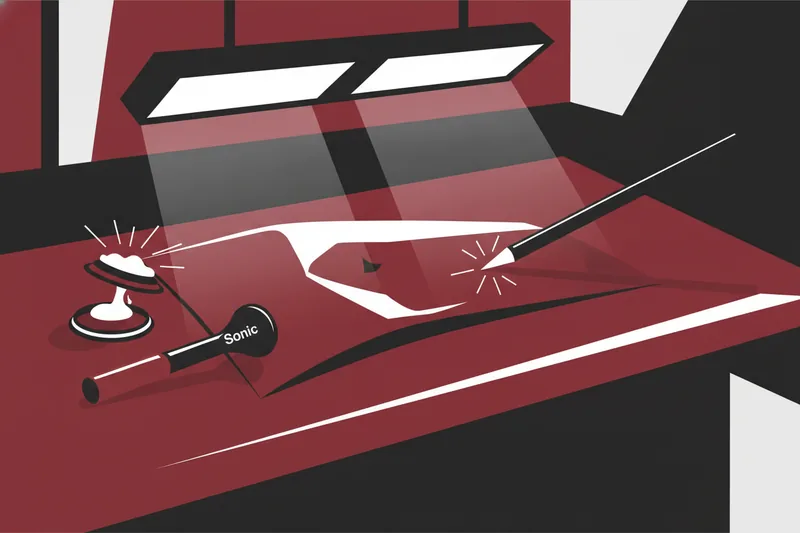
A Glexo PDR tools lineup spans several working categories: cold-glue systems and the tabs that pair with them, Sonic tips, blending hammers, slide hammers, and knockdown tappers, surface-prep wipes, and anti-adhesive storage film. Each category does one job in a repair and hands off cleanly to the next, and understanding how they connect — rather than shopping SKU by SKU — is what lets a shop match tools to the job in front of it instead of working around whatever happens to be in the case.
What the PDR System Is Built From
A technician researching PDR tool options is choosing between working categories, not a single flagship item. The lineup spans cold glue, tabs, Sonic tips, hammers and knockdowns, surface-prep wipes, and storage film, built to function as a connected system rather than a one-off purchase.
The core tool categories
Cold glue is a reusable, tacky pulling compound applied to a tab rather than straight onto the panel — that's what lets the same tab and glue see reuse across a shift. Hot glue sticks fill a related but separate role: fed through a heated glue gun, they bond and release fast, suiting a quick single pull where reusability matters less than cycle time. PDR tabs are the attachment points that carry pulling force into the dent; shape governs behavior more than material, with round tabs suited to contact-point pulls and elongated crease-shaped tabs built to distribute pull along a line. Sonic tips are a line of interchangeable tapper and knockdown tips used for internal access and fine surface control — the name is worth clearing up, below. Hammers and knockdowns cover several distinct jobs: blending hammers settle and blend metal through controlled impact, knockdown tappers (also called tap-downs) lower a high point or damage crown with localized pressure, slide hammers supply the inertial pulling force once a tab is attached, and conventional body hammers handle broader panel work. Surface-prep wipes handle the chemical cleaning, isopropyl alcohol or a PDR-specific degreaser, that strips wax, sealant, and coating residue before glue goes down. Anti-adhesive storage film is the double-sided coated sheet that protects a tab's adhesive face between jobs so it isn't ruined by dust or fused shut in a case.
How they relate as a system, not standalone items
None of these categories does useful work alone. A clean, prepped surface is what lets glue actually hold; the right tab shape is what turns that adhesion into controlled pulling force instead of a tab that peels or twists off-center; a slide hammer or hand-operated puller is what turns the bond into movement; a knockdown tapper or blending hammer is what finishes the surface once the bulk of the dent is gone. Cold glue itself is a generic PDR product category that no manufacturer owns outright — what sets a lineup apart is how consistently its tabs, tips, and glue variants are built to work together across a full repair, not any single compound.
The Principles Behind Choosing the Right Tool
Choosing among these categories starts with the repair plan, not the toolbox. Selecting a pulling device or tip before the damage, finish, and access have been assessed is a common and avoidable error. The sequence that works best moves from OEM authorization and safety, through part and finish identification, to damage mechanics and access — only then to the tool and its contact profile. The result of that process is a category of tool to reach for, not a guaranteed outcome or a specific SKU; picking a tool first inverts the whole order.
Temperature-matched glue selection
Cold glue comes in temperature-specific ranges rather than one formulation for every job. One range is positioned for conditions up to about 86°F (30°C); a separate warm-weather formulation is built for conditions above that line, and it's a distinct compound rather than the standard glue simply run warmer by the technician. Temperature is the primary variable in that choice, though pull technique and the metal being pulled play a role too — which is why a shop working a cold morning and a hot afternoon on the same lot keeps more than one range on hand rather than relying on a single glue year-round.
Clearing up the "Sonic" name
"Sonic" names a tip shape and function, not an ultrasonic or powered mechanism — there's no vibration or acoustic component involved. Functionally these are interchangeable tapper and knockdown tips: the same category of hand-operated, mechanically driven tool as any other knockdown, sized and shaped for restricted access and fine control.
Soft tips vs sharp tips
Within that line, soft or rounded tips spread contact over a wider area and suit internal work done with sustained pressure, since distributed contact lowers the chance of a sharp push-mark, though it doesn't eliminate the risk of overpushing. Sharp or pointed tips concentrate force into a smaller area for short, controlled strikes on stretched metal where a broad tip can't reach the low point cleanly. The choice follows the damage and the access reached, not a fixed rule — the technician reads the dent before picking either one.
When tabs come before direct glue
A tab earns its place when the job needs a controlled, repeatable pulling point: hail work and glue pull repair (GPR, a conventional panel-straightening method derived from PDR) both depend on it. Hot glue applied directly, without a tab, suits the opposite case — a fast, one-off grab where reusability and exact pull geometry matter less than speed. Neither replaces the other; they answer different questions about how much control and how much speed a given pull needs.
Matching Tools to Real Repair Scenarios
Matching a category to the job still starts with the vehicle, not the kit. A repair plan has to identify the part, substrate, finish, and access before any pulling or tapping method is chosen, and the tools on hand should never drive that diagnosis. Where a part hasn't been positively identified as cosmetic or structural, with material and construction confirmed, the repairability call stays open and no method gets selected yet.
Hail repair: redundancy across tabs, tips, and hammers
A hail job rarely draws on one category at a time. Professional hail-repair workflows combine lighting, pulling devices, tabs, glue, and knockdowns as the count and size of dents demand, rather than following one fixed sequence of tools. That's the practical reason hail-season work leans on redundancy: a shop running dozens of dents a day needs enough tabs prepped and enough glue mixed that one pull failure or one tab losing tack doesn't stall the line, with tappers and blending hammers ready to finish each panel as it clears. When OEM restrictions, severity, or economics rule out a clean pull altogether, the plan shifts to repair-and-replace rather than forcing more tool changes onto a panel that won't cooperate.
Internal access and fine detail work
Where backside access exists, Sonic tips and knockdown tappers handle detail work a blending hammer can't reach cleanly — a correctly sized, mirror-polished tip is what keeps fine knockdown work from leaving marks of its own on the finish. Soft tips under sustained pressure work stretched metal through restricted openings; sharp tips take over for short, precise strikes once the low point is visible and reachable.
Prepping contaminated surfaces
Older paint, ceramic coatings, sealants, and road film all act as separators that cut glue adhesion before a pull starts. Surface-prep wipes using isopropyl alcohol or a PDR-specific degreaser handle that cleaning ahead of any glue application, and the extra pass matters more on a ceramic-coated or heavily waxed panel than on fresh factory paint. Skipping it is one of the most common reasons a cold-glue tab lets go mid-pull. Checking surface condition belongs on the same pre-pull checklist as confirming lighting, access, and safe support — all of it gets settled before the pull begins.
Choosing Your Starting Point: From Category to Kit
A kit is a set of categories assembled for a type of work, not proof of capability on its own — a bigger case has never meant a better-equipped technician, and being listed as an option in a given matrix never makes a tool mandatory for every repair; the right combination depends on the vehicle and the job.
Building a starter kit by category
A working starting point covers the full range of contact rather than stacking tools at one end of it: something for rough-out and bulk movement, something for intermediate shaping, and something for precision finishing, since that's a general progression in working scale rather than a fixed sequence of specific tools. In practice that means, at minimum, a cold-glue system with tabs in a couple of shapes, a slide hammer or hand-operated puller, a blending hammer, a knockdown tapper, and enough surface-prep wipes to carry a full day's schedule.
Building a hail-season kit by category
A hail-season kit adds redundancy within the same categories rather than new ones: more tabs prepped across more shapes, glue mixed and ready in the ranges the season's temperatures call for, and enough tappers and blending hammers that one being mid-use on one panel doesn't stall the next. A hail-specific tool system is one piece inside a complete hail repair plan, not the plan itself — lighting, access, and assessment still come first.
Decision checklist by job type
- Dent count and access decide whether tabs or direct glue lead the pull.
- Ambient conditions decide which cold-glue range to mix for the day.
- Internal access and finish precision decide tip profile — soft for sustained pressure, sharp for short strikes.
- Panel finish and coating decide how much surface prep a job needs before glue goes down.
A full walkthrough of the pull sequence itself, start to finish, is really its own guide rather than something to compress here.
PDR Lineup: Quick Answers
Is Sonic an ultrasonic tool? No. Sonic names a family of tapper and knockdown tips. They work the same way as any other hand-operated knockdown, driven by mechanical pressure or strikes, not sound or vibration.
Can I use hot glue in cold weather? Hot glue is also offered in temperature-specific variants for hot versus cold working conditions, so its performance depends on ambient temperature much like cold glue does, which is why cold-glue is split into separate ranges by temperature rather than sold as one product. Matching the glue to current conditions, instead of defaulting to a single product year-round, is the safer habit. Exact behavior across temperature bands is enough of a topic to deserve its own reference rather than a quick answer here.
Do I need tabs and direct glue both? Most working shops end up with both, because they answer different needs: tabs give a controlled, repeatable pulling point for glue pull repair and hail work, while direct hot-glue application suits a fast single pull where speed matters more than pull geometry.
Matching the right category to a repair matters more than any single spec sheet. Explore Glexo PDR tools across categories — cold-glue and tab systems, Sonic tips, hammers and knockdowns, and surface-prep consumables — to see how they map onto your shop's typical repairs, and reach out for guidance building a starter or hail-season kit sized to your volume.