E6000 vs Super Glue: Strength & Cure Time
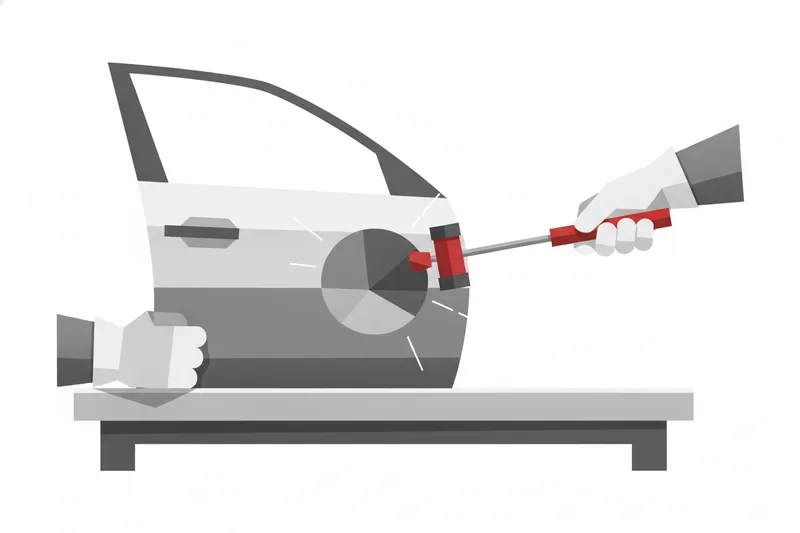
E6000 holds up better under long-term stress and flexes without cracking, while super glue (cyanoacrylate) sets in seconds but stays rigid and brittle — so for craft, jewelry, and general repair work, the choice comes down to whether you need instant tack or lasting flexibility. Neither one, however, is built to survive the shear stress and thermal swings of pulling a dent off a car panel, which is a different mechanical problem entirely and the reason purpose-built PDR cold glue exists as a third category. This guide breaks down the strength, cure time, and surface performance of both adhesives, then explains exactly where they run out of road for automotive work.
What Is E6000 Glue?
E6000 adhesive is a solvent-based, rubber-toluene formulation classified as a contact adhesive — it's designed to be applied to one or both surfaces, allowed to become tacky, then pressed together to form a bond that keeps working as materials expand, contract, or flex. That flexibility is E6000's defining trait: once fully cured, it stays semi-elastic rather than turning glass-hard, which is why it's a favorite for jewelry, fabric, rubber trim, and mixed-material craft projects where rigid glue would crack under movement. The tradeoff is cure speed — E6000 needs a real window of open time to reach full strength, and it's not formulated to resist high shear loads applied suddenly, which matters once you start thinking about anything beyond hobby-scale bonding.
Glexo technicians run into a version of this same flexibility-versus-shear tradeoff every day, just at a different scale — it's the same reason panel-pulling work needs an adhesive engineered for repeated, high-load cycles rather than a general contact glue.
What Is Super Glue (Cyanoacrylate)?
Super glue is the common name for cyanoacrylate, an adhesive that cures through a chemical reaction with atmospheric moisture rather than by solvent evaporation. That's why it sets so fast: press two surfaces together and the moisture on them triggers a near-instant polymerization, often reaching handling strength in under a minute. This speed is also its weakness. Cyanoacrylate cures into a hard, glassy bond with almost no flexibility, so it resists straight pull-apart force well but fractures under flex, vibration, or repeated shear. Cure time is measured in seconds to minutes, not the extended open time E6000 allows, which makes super glue better suited to small, precise, load-light bonds than anything expected to move or take a sustained pull.
E6000 vs Super Glue: Strength and Durability Compared
Strength isn't one number — it depends on the type of load. Cyanoacrylate typically wins on straight tensile strength (pulling two flat-bonded surfaces directly apart) because its rigid bond resists stretching. E6000 tends to win on durability over time and under flexibility vs brittleness stress, because its rubberized cure absorbs vibration and minor movement instead of cracking. Neither, though, is formulated around shear strength — resistance to sideways or twisting force applied at the bond line — which is the exact load a slide hammer generates when pulling a dent. For comparison, Gorilla Glue, a polyurethane-based adhesive that expands as it cures, is often cited as a stronger general-purpose option than either E6000 or cyanoacrylate for porous materials, but it shares the same core limitation: none of these three glues were engineered for the shear-and-release cycle that automotive glue-pull work demands.
Cure Time and Working Time Differences
Working time — how long you have to position parts before the bond sets — separates these adhesives sharply. Cyanoacrylate offers almost no working time; it grabs within seconds, which is ideal for small precision fixes but unforgiving if alignment needs adjusting. E6000 gives you several minutes of open, tacky working time before it starts to firm up, and considerably longer before it reaches full cure time and maximum strength — often requiring a full day or more to cure completely. That extended cure window is useful for craft assembly where you need to reposition pieces, but it's a liability anywhere a fast, repeatable, load-bearing bond is the actual requirement.
Best Surfaces and Use Cases for Each Glue
E6000, as a contact adhesive, performs best on flexible or mismatched materials — rubber to fabric, leather to metal trim, foam to plastic — where movement between surfaces is expected. It's a common choice for jewelry assembly, shoe repair, and craft projects involving rhinestones, beads, or fabric trim. Super glue excels on rigid, low-porosity materials that need a fast, small-area bond: broken ceramics, small plastic parts, fine woodworking joints, and quick fixes where clamping isn't practical. Neither is intended for bonding surfaces (plastic, metal, wood, foam) under continuous mechanical load — both are general-purpose adhesives for assembly and repair, not for structural or repeated-cycle work.
E6000 vs Super Glue for Plastic, Metal, and Wood: Which Bonds Better
On plastic, results vary heavily by resin type — both adhesives struggle with low-surface-energy plastics like polypropylene and polyethylene unless the surface is specially prepped. On wood, cyanoacrylate bonds fast and holds well for small joints, while E6000's flexibility can actually work against it in rigid wood-to-wood applications that need a stiff joint. On metal, cyanoacrylate creates a hard, brittle bond that can crack under vibration or thermal cycling, while E6000 holds up better against movement but takes far longer to reach usable strength. Both are also sensitive to temperature sensitivity — cold slows cyanoacrylate's cure almost to a stop, while heat can soften E6000's rubberized bond — which is a serious problem for anything used outdoors or on a vehicle exposed to ambient swings.
Why Neither Glue Is Built for Automotive Panel Repair
This is where the comparison stops being academic. Glue-pull dent repair works by bonding a metal or plastic tab to the dent's low point, then applying controlled outward force with a slide hammer or mini-lifter until the metal returns to shape. That's a repeated, high-shear load applied through a small bonded area — precisely the stress profile neither E6000 nor cyanoacrylate is designed to survive. Cyanoacrylate's brittleness means it can snap mid-pull instead of transferring force to the panel. E6000's long cure time makes it impractical for a workflow that needs tab changes every few minutes, and its bond isn't rated for the shear loads a slide hammer generates.
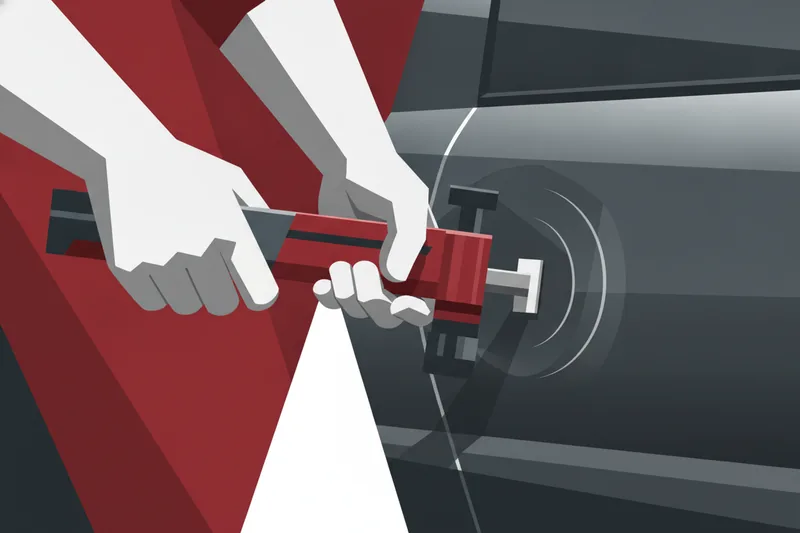
PDR cold-glue tabs solve this differently: PDR cold glue is a single, ready-to-use, reusable tacky or viscoelastic pulling compound applied to a compatible tab — not a two-part or structural adhesive. It requires no heat gun, peels cleanly off the panel after the pull with zero residue, and gets reapplied to the tab for the next cycle. Because it's not a permanent structural bond, it's engineered for exactly the load-and-release cycle glue-pull repair demands, something neither craft adhesive was built for. Pull performance still depends on real variables — tab shape and stiffness, compound thickness, panel and ambient temperature, and contact duration — which is why Glexo's cold glue systems are offered in temperature-specific variants, formulated differently for use up to roughly 86°F/30°C versus above it, rather than as a single one-size-fits-all product.
Pros and Cons of Each Adhesive
E6000 adhesive
- Pros: flexible cured bond resists cracking under movement; bonds dissimilar materials well; good gap-filling
- Cons: long cure time; strong solvent odor during application; not shear-rated for load-bearing repair work
Super glue (cyanoacrylate)
- Pros: near-instant set; strong on rigid, low-porosity materials; precise for small repairs
- Cons: brittle once cured; poor flexibility vs brittleness performance under vibration; weak gap-filling ability
Which Glue Should You Choose? (FAQ)
What glue is stronger than E6000?
Cyanoacrylate beats E6000 on raw tensile pull-apart strength, and polyurethane adhesives like Gorilla Glue are often rated higher for porous-material bonding generally. But "stronger" in a lab sense doesn't translate to automotive shear performance — for glue-pull work, a purpose-built PDR cold glue system engineered around tab-and-panel shear loads outperforms all three for that specific job.
What surfaces won't E6000 stick to?
E6000 struggles with low-surface-energy plastics such as polypropylene and polyethylene unless they're specially treated, and it performs poorly on surfaces with oil, wax, or silicone contamination. It's also a poor match for continuously load-bearing metal joints, which is a separate issue from surface chemistry — it's a mechanical shear limitation, not an adhesion one.
Should professionals use E6000 or super glue for metal panels?
No. Neither is formulated for repeated shear loading or panel-specific temperature swings. Professional glue-pull repair calls for a dedicated cold-glue system matched to ambient temperature and tab compatibility, not a general-purpose craft or hobby adhesive.
See Glexo's temperature-rated cold glue systems and tabs, engineered specifically for glue-pull dent repair where E6000 and super glue fall short.