Aluminum Dent Puller: Cold-Glue vs Stud Welding
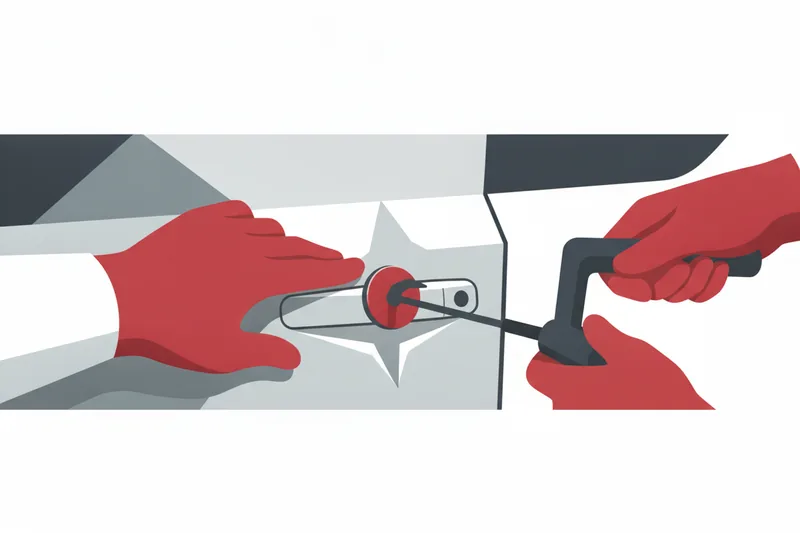
Cold-glue pull systems and stud welders both pull a dent back into shape, but they load an aluminum panel very differently. Stud welding puts a brief heat spike into the metal at the weld point; cold-glue pulling puts none. Because aluminum loses temper faster than steel once heat enters the picture, many technicians default to glue-pull tabs worked with slide hammers, mini lifters, and T-handle pullers on aluminum jobs, and reserve stud-welded pulls — drawn with a bridge puller or a stud-welding slide-hammer attachment — for situations a glued tab genuinely can't reach. Which one is actually right for a given panel still comes down to the alloy, the temper spec, the access, and what the OEM repair procedure allows, not a blanket rule for "aluminum" as a category. Glexo's glue-pull tabs and cold-glue systems are built around that heat-free approach, and knowing when they fit the job — and when they don't — starts with understanding how aluminum behaves under a pull in the first place. This guide covers that behavior, compares the two pulling approaches, and lays out what a kit needs to carry for aluminum work.
Why Aluminum Panels Pull Differently Than Steel
Aluminum used in body panels has a lower yield strength and a lower elastic modulus than steel of comparable gauge, though panel thickness and shape can offset that enough that stiffness alone won't tell you which metal you're actually working. That lower modulus means aluminum deflects further before it takes a permanent set — which is the exact range a technician is trying to control during a pull.
How Heat Alters Aluminum's Temper
Much of an aluminum panel's strength comes from its temper, the heat-treatment state built in during manufacturing, rather than from the raw alloy on its own. Any process that puts heat into the panel risks softening that temper inside a heat-affected zone around the point of contact — exactly where the panel most needs to hold its new shape. Steel tolerates a welder's heat spike with a wider safety margin before temper loss becomes a practical concern; aluminum doesn't give that same margin, and heat-assisted work doesn't make a panel automatically repairable on its own — it just raises how carefully the process has to be controlled.
Why Stress and Thickness Matter More on Aluminum
Aluminum work-hardens as it's damaged and as it's worked, so a stamped bodyline that was already under stress from the original impact can resist correction more stubbornly than the same crease would in steel. That doesn't make aluminum an automatic disqualifier for PDR — it means the same crease that comes out of steel in a handful of passes can take longer and more deliberate technique in aluminum. Push an already-stressed, thin aluminum section too far and the result is oil-canning: an area that flexes between two shapes instead of settling into one, because repeated force has stretched the metal past its ability to hold the original geometry. Alloy, temper, and part-specific OEM rules matter more here than the general label "aluminum" — two similar-looking creases in aluminum can have very different outcomes.
Stud Welding vs Cold-Glue Pulling: Which Protects the Panel
How Each Method Applies Force
A stud welder welds a pulling stud — a small pin — to bare metal at the low point of the dent, then a bridge puller or a stud-welding slide-hammer attachment draws the dent back using inertia or sustained leverage. That pulling hardware is purpose-built for stud welding; it's a different tool category from the slide hammers used in PDR glue-pull work, which attach to a glued tab rather than a welded stud. Reaching bare metal for the weld means stripping the finish at that exact spot first, and the weld itself puts a brief but real heat spike into the panel.
Cold-glue pulling skips the weld entirely. The technician bonds a pulling tab to the existing finish with a reusable tacky or viscoelastic cold-glue compound, then connects a pulling device directly to the tab — a slide hammer for a fast impulse pull, a T-handle puller for a steady manual pull, or a mini lifter for a controlled, localized lever pull. No metal gets exposed, and no heat enters the panel at any point in that chain.
Why Heat-Free Pulling Lowers Risk
Because a cold-glue pull never exposes bare metal, it sidesteps the temper-loss risk that heat-based pulling carries on aluminum, and it tends to preserve the exterior coating and backside corrosion treatment better than weld-on pulling — a process advantage, not a guarantee of adhesion to every finish. Whether that heat-free route is the better call on a specific panel still depends on the alloy, the temper spec, and what the OEM repair procedure for that part permits, not a general rule that applies to aluminum as a whole. Glue pulling also has its own limits: a pull has to stop if the paint is cracked, delaminated, or otherwise unstable, or if it starts expanding the damage crown — the raised, distorted area around the dent — rather than flattening it, since pushing past that point risks panel instability instead of a repair.
Does Glue Pulling Actually Work on Aluminum
Cold-glue pulling suits broad initial movement, certain large or complex damage, and repeated-pull hail workflows, and it combines well with backside pushing in hybrid repairs. Cold glue and hot glue each suit different parts of the same job — cold glue's broad, distributed pull moves large areas, while hot glue's pinpoint grip handles sharp, deep damage — but there's no fixed order between the two; which one a technician reaches for first depends on the specific repair plan for that dent, not a routine every job follows. Aluminum isn't disqualified from glue-pull repair either way: its springback behavior differs from steel's, a function of differences in residual stress and plastic-strain history built up as the metal is damaged and worked, and that difference changes the technique and the time required, not whether the dent can come out.
Matching the Method to Your Panel, Access, and Budget
Naming a panel — hood, door skin, quarter panel — tells you what access questions to ask, but it doesn't hand you a ready-made route to the backside: construction varies by vehicle, trim, powertrain, and options, so access gets confirmed on the actual car, not assumed from the panel name. Method selection follows an assessment of material, geometry, finish, access, construction, and OEM restrictions together, not a fixed rule tied to panel type alone.
When Access Favors Glue-Pull Tabs
When backside access is limited — a roof closed off by bows, a quarter panel with the inner structure sealed up — a stud-welding approach still has to reach the exterior to place the stud, exposing bare metal somewhere that may be awkward to refinish afterward. A glue-pull tab works entirely from the outside, so it doesn't depend on backside access at all, which makes it the practical choice on panels where opening the back up would mean extra disassembly. No aluminum-specific technique gets assigned until the material is actually confirmed, so the access decision and the material decision get made together.
Cost and Efficiency Tradeoffs
A stud welder adds a per-pull consumable cost for the pins plus a finishing step — grinding the weld spot flush and refinishing it — which adds labor time even when the pull itself is quick. Cold-glue tabs are reusable across pulls as long as their condition and the product instructions allow it, which keeps consumable cost down on jobs with many dents, hail repair being the clearest case. Any aluminum-specific adjustment on an estimate still needs confirmed material and a matrix that actually authorizes that adjustment — an upcharge line existing on paper doesn't by itself mean aluminum pulling work is permitted on that panel.
What a Capable Aluminum Dent Puller Kit Needs
A kit built for aluminum work needs range, because the panel's contour decides which tab geometry can seat flat enough to hold.
Tabs and Glue Variants for Climate
A hood or roof with broad, shallow curvature calls for round tabs; a crease running along a bodyline needs an elongated crease tab that spreads the pull along the line instead of concentrating it at one point. More flexible tabs conform better to curved sections, while more rigid tabs transfer force more directly on flatter areas — which performs better is product-specific, so it's worth testing a tab against the panel's actual curve rather than trusting the label alone.
Cold glue also needs to match the working temperature, not just the panel. PDR cold glue is an established category, but it isn't a standardized chemistry — tack, stiffness, and temperature behavior vary by manufacturer and by product line, so matching glue to a hot or cold shift in ambient conditions means checking the rated range on the specific product, not assuming every cold glue behaves the same way. Pull dynamics matter alongside temperature too: a more rigid, brittle glue suits a sharp, fast pull, while a more elastic glue suits a slow, sustained one.
Compatible Slide Hammers and Accessories
The pulling device has to match the job, not just the tab: a mini lifter gives a controlled, localized lever pull; a bridge puller gives a sustained pull with support around the repair area; a slide hammer delivers a fast impulse pull; and a T-handle puller gives a manual, aligned pull on smaller work. None of that replaces proper surface prep — wax, sealant, ceramic coating, and road film all act as a release layer under adhesive, so the panel needs a real chemical clean before a tab goes on, not a quick wipe. That's a different category entirely from the suction-cup dent pullers sold for consumer use, which depend on a continuous, smooth, clean surface to hold a vacuum seal and aren't suited to creases, deep dings, or cracked paint in the first place.
Aluminum Dent Puller FAQ
Is aluminum easy to dent? It takes less force to move than steel of similar gauge in some cases, but thickness and panel design often offset that, and aluminum work-hardens aggressively at stamped features like body lines — so a dented bodyline can resist correction more than the same line would in steel.
Do dent pullers work on aluminum? Glue-pull tabs and compatible pulling devices do work on aluminum; what changes is technique and time, since aluminum's springback behavior — shaped by residual stress and plastic-strain history rather than steel's — calls for more deliberate work. The exception is the suction-cup dent puller: it isn't built for sharp creases, deep dings, or cracked paint, and professional shops treat it as a niche tool rather than a serious option for panel repair.
If you're weighing which approach fits your next aluminum job, Glexo's cold-glue pull systems and tabs are built around that heat-free, panel-safe principle — worth a look to see which kit matches your workflow.