Glue, Suction, or Bridge: Choosing the Right Dent Puller Kit for Professional PDR
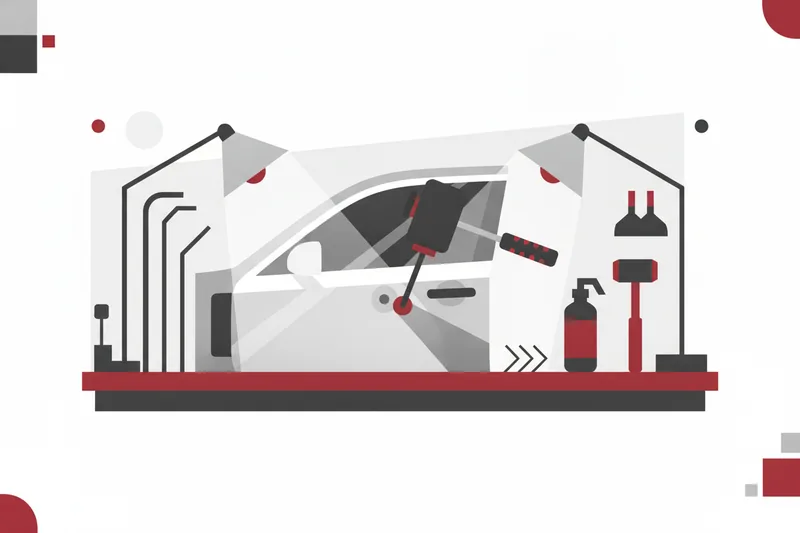
For professional-grade paintless dent repair (PDR), a glue-pulling system — glue tabs run on a slide hammer or lever-style puller, with a cold or hot-melt adhesive matched to shop temperature — gives technicians more control and more repeatable results than suction cup or bridge-type dent puller kits. That advantage shows up most clearly on hail volume, where glue tabs can be released, cleaned and reused through many pulls in a single shift. Bridge pullers and suction cups still earn a spot in the toolbox, but only on a narrow slice of jobs: easy-access dents and shallow, paint-sensitive panels where rigging a full glue setup isn't worth the time. The comparison below works through control, adhesion reliability, hail-volume throughput and learning curve to show where each kit type actually belongs.
What a Dent Puller Kit Is and the Three System Types
A dent puller kit is the set of tools used to apply an external pulling force to a damaged panel, drawing the metal back toward its original shape — the basic move behind most PDR, whatever puller drives it. Kits sold under that name typically fall into suction pullers, glue-pull kits, or rod kits, and consumer-grade multi-tool boxes often throw several of these into one case alongside bridge-style frames for backside pushing.
A glue-pulling system bonds a tab to the painted surface with an adhesive, then transfers pull through that tab using a slide hammer or a lever-style puller. The adhesive side of the category runs from reusable tacky or viscoelastic cold glue — suited to broad initial movement, repeated-pull hail work, or combination repairs — to PDR hot-melt adhesive, which is heated before application and bonds as it cools.
A suction cup dent puller is a hand-operated rubber vacuum pad built for large, shallow dings on flat panels; in professional shops it's used sparingly, and most technicians treat it as an entry-level tool rather than a repair-day staple, since the available evidence doesn't support it as a precision or primary method.
A bridge puller is a frame supported on opposite sides of the repair zone that pulls the dent upward rather than pushing it out from behind the panel.
Quick Picks by Repair Need
These picks assume the dent has already been assessed for access, finish and panel material — reaching for a puller before that assessment is a common misstep that leads to the wrong tool for the job. With that groundwork done, here's which system fits which need:
- OTC Automotive Dent Repair Kits & Tools — general marketplace glue-pulling kits. These bundles show a baseline glue-kit construction (tabs, adhesive, a basic puller), but they're assembled for broad retail reach rather than shop throughput, and they typically lack the redundant tab counts and heat control a high-volume hail shop needs to keep several pulls running at once.
- JERBOR Car dent puller kit — a generalist hybrid kit aimed at green hands. It bundles suction cups, a bridge frame and glue tools into one box as a way to try several approaches, which makes it a reasonable starting point for learning but not a standalone professional setup once volume or panel difficulty increases.
- A professional glue-pulling system — glue tabs matched to a slide hammer and a temperature-appropriate cold glue — for high-volume hail repair. Cold glue's reusability across repeated pulls, and its fit for repeated-pull hail workflows, is what lets a shop keep several dents moving through a shift without waiting on cure time.
- A bridge puller for easy-access panel touch-ups. Where a dent sits on a flat, open area with clear mounting points on both sides, a bridge frame sets up fast with minimal rigging.
- A suction puller for shallow, paint-sensitive panels. It leaves no adhesive residue on the finish, but it only works on damage that's large, shallow and sitting on an easily reached, flat area — it isn't built for a sharp damage crown or restricted access.
How We Compared Glue, Suction, and Bridge Systems
This comparison runs on four criteria that matter on a repair floor, not on marketing copy: control (how precisely the pull can be aimed and modulated), adhesion reliability (how consistently the attachment holds load without slipping or failing), hail-volume throughput (how many dents the system can move through per shift), and learning curve (how much training a technician needs before output is reliable).
Market share isn't one of the criteria. There's no solid data on how common cold-glue, hot-melt or suction methods actually are across shops, so popularity would just be a guess dressed up as a ranking factor. Options are also grouped by how they function rather than by brand name — one manufacturer's tab or compound doesn't define the whole glue-pulling category any more than one hammer defines every bridge puller on the market. Each system is scored against those four criteria on how it performs on the job, since price and packaging vary by supplier and change faster than the underlying mechanics.
Side-by-Side: Glue vs Suction vs Bridge Pullers
Control and repeatability
Glue pulling channels force through one tab, and the control profile depends on the puller behind it: a slide hammer delivers a sharp impulse, while a lever-style or bridge/beam puller delivers a steady, sustained pull — different jobs call for different profiles, and a pull that lands off the tab's axis can displace metal in an adjacent area instead of just lifting the dent. Suction pullers offer almost no directional control; the pad grips a broad area and the technician pulls straight back, which only works on simple, shallow damage. Bridge pullers sit in between — steady and supported once rigged, but every reposition means breaking the frame down and resetting it.
Adhesion reliability and tab compatibility
A glue pull depends on six compatibility checks lining up: finish with cleaner and release agent, adhesive with glue gun, adhesive with tab, tab with panel, tab neck with adapter, and adapter with puller. Miss one and the bond — not the metal — becomes the failure point. Cold glue's hold also shifts with ambient temperature, which is why shops keep more than one grade on hand rather than running one formulation through every season. PDR hot-melt adhesive sidesteps some of that temperature sensitivity and suits jobs with no usable backside access, or where the pull needs to combine tension with crown control — though a double-panel dent or a compromised finish can rule glue pulling out altogether, whichever adhesive is used. Suction cups and bridge frames carry no adhesive bond, so this failure mode doesn't apply to them; their weak point is grip and rigidity instead.
Hail-volume throughput
This is where glue-pulling systems pull ahead. A cold-glue tab can be released, wiped down and reused through many pulls in a shift, which fits a repeated-pull hail workflow directly. Suction cups can't be staged ahead of a pull the way a tab can, and a bridge frame needs remounting for every new dent location — time that adds up fast across a hail panel with dozens of hits.
Learning curve
Suction pullers are the easiest to pick up — there's little technique beyond centering the pad — but that simplicity is also their ceiling. Bridge pullers need a technician who understands rigging and support points before results get consistent. Glue pulling has the steepest start: reading tab size and placement, matching glue to temperature, and choosing between an impulse and a sustained pull all take practice, but it's the only one of the three built to scale to high-volume professional work once that skill is there.
Which System Fits Your Shop
A professional high-volume hail shop gets the most out of a glue-pulling setup: tab redundancy lets several dents stay in progress at once, and the system scales to the pull-count a hail panel demands. The tradeoff is upfront investment in training and in matching tabs, glue and puller — not a shortcut most shops take for a handful of dents a week.
A low-volume or green-hand technician is usually better served starting with a hybrid or bridge-leaning kit while building judgment on access, finish and damage geometry, since tool selection is only supposed to follow that assessment, not precede it. A kit that bundles several approaches, used as a learning tool rather than a daily driver, lets a newer technician see which method a given dent actually calls for before committing to one system.
An easy-access panel specialist — someone mostly working flat, open body panels with clear backside or bridge-mount access — can lean on a bridge puller for a large share of the work, since rigidity and reach matter more there than adhesion chemistry. That said, being workable on an easy-access panel doesn't make a bridge puller the default for every dent of that shape; the finish, the substrate and the access still decide it case by case.
None of these are fixed roles. The same shop might run a bridge puller on a quarter panel, a suction cup on a hood ding during a quick mobile call, and glue tabs on the hail that rolled in overnight — matching equipment to the job in front of you, not locking the shop into one category.
Where Each System Falls Short
Glue-pulling systems fail at the compatibility layer before they fail at the metal. If the finish, the tab, the adhesive and the puller aren't all confirmed to work together, the bond lets go mid-pull instead of transferring force to the dent, and a double-panel dent or a compromised finish can take glue pulling off the table entirely regardless of how well the rest of the kit is matched. It's also a system that needs upkeep: tabs need cleaning between pulls, and cold glue has to be stored and handled within its working condition to stay reusable.
Suction cup dent pullers run into a hard wall at access and geometry. The evidence doesn't support treating them as a precision tool, a primary repair method, or anything beyond possible coarse movement on a simple dent, and nothing in the category makes them the easiest or most reliable finishing option either. Once a dent has a sharp crown, sits near an edge, or needs more than a straight pull off a flat area, the suction cup is out of its depth.
Bridge pullers are limited by rigidity and mounting. The frame needs stable contact points on both sides of the repair zone, so a curved panel, a dent near a flange, or damage without enough flat margin to seat the feet rules it out. Repositioning for a second dent means a full reset, which is why bridge pullers suit a handful of easy-access jobs rather than a hail panel's worth of hits.
Matching a dent puller kit to a shop's volume comes down to the assessment on each panel, not the brand on the box: glue pulling for repeat professional and hail work, bridge and suction tools kept around for the easy-access exceptions. Glexo's range of professional glue-pulling systems and PDR consumables is built around that glue-first approach, worth exploring when it's time to standardize a shop's setup around repair volume and technique.